Thursday, May 15, 2008

The Second Second Story Series - Concert One Pictures

Here are more pictures from the first concert of the Second Second Story Series on April 16, 1978. Well, this first picture of Carl Stone looking up to Jan Greenwald's Mobile 4 John Cage was posted before. It's still kinda cute.

Second Second Story Series - Carl Stone and Jan Greenwald's Mobile 4 John Cage 1978N ext are two shots of a rehearsal of Song for Three Clarinets by Lois Vierk (now known internationally as Lois V Vierk). Lois is conducting in the first shot. The clarinetists, left to right, are Laurel Hall, "Dave" Ocker and Alan Solomon.

Lois is listed in Wikipedia. Follow the links to more interesting reading.

Second Second Story Series - Song for Three Clarinets by Lois V Vierk 1978
In this shot you can see the screen for the film in Carey Lovelace's Crotchets and Contrivances performed by Stuart Fox, guitar and James Hildebradt, percussion - but there are no pictures of them.

Second Second Story Series - Song for Three Clarinets by Lois V Vierk 1978
Two shots of Songs to Death by Anna Rubin with Joan Collopy, soprano, Erika Duke, cello and Lori Alexander, piano.

Second Second Story Series - Songs to Death by Anna Rubin 1978Second Second Story Series - Songs to Death by Anna Rubin 1978


(Mandala) by Pauline Oliveros was the final piece on the concert. Here's Pauline's website.

The title drawing was a map of the players' locations. Four percussionists positioned around the bass drum. Four clarinetists positioned towards the four directions and eight glass players, two in each quadrant. Apparently the soprano started on the outside and spiraled in towards the center during the piece. That's how I interpret it now with my very foggy memory. If your memory unit is better please leave a comment. Judging by these pictures everyone wore white.

Anyway, the next picture is of me, "Dave" the clarinetist, at my location on the far side of the white bass drum. White was never my color.

Second Second Story Series - (Mandala) by Pauline Oliveros 1978Here are a few other performers in the Oliveros piece milling around. With one hand on his hip the other holding a glass is Tom Recchion, well-known these days for his membership back then in the LA Free Music Society .

Second Second Story Series - Tom Recchion and (Mandala) performers 1978
All these Polaroid pictures were taken by Robert Jacobs - find him online here and here.

There will be at least two more posts in the Second Second Story Series Series. The next will include more pictures - polaroid headshots taken by Rob Jacobs and the story of how a few of them have become portraits one of which hangs in my home. And then, on May 30, the final concert - featuring Terry Riley's In C - with its three press reviews.

Click this link to see all the Second Second Story Series series posts.
Click this link to see all posts about the Independent Composers Association.
You can download the entire series program book as a 17 meg. pdf file by clicking this sentence. It has more information about every piece, composer and many of the performers.
Clink any picture to see it get bigger.

Second Story Tags: . . . . . . . . . . . . . . . . . . . . . . . .

Thursday, May 08, 2008

One Year of Mixed Messages

Hey, over on the right where it says "Hey! Over here on the right.", is Mixed Messages - a whole other blog. My other blog. One of my other blogs.

Today (May 8, 2008) is the one-year anniversary of my first post to Mixed Messages. In 29 more years I'll make a big deal out of it.

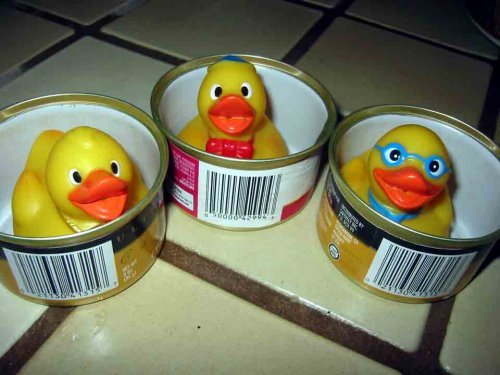
Click here to see the initial Mixed Messages post. Or just look at this picture. The three little duckie squeeze-water-pistols are still in their individual cat-food-tin boats buffeted by the waves of our kitchen counter.

three duckies in cat food tins (c) David Ocker
Mixed Messages is a TumbleLog hosted by Tumblr. Go start your own. I started mine because I wanted a way to post single pictures or little items frequently and easily. Each post here on Mixed Meters takes too much time and thought.

If you go to Mixed Messages most recent post you can scroll back through page after page of previous Mixed Messages posts using the hard-to-find "previous" or "next" links at the very bottom of each page.

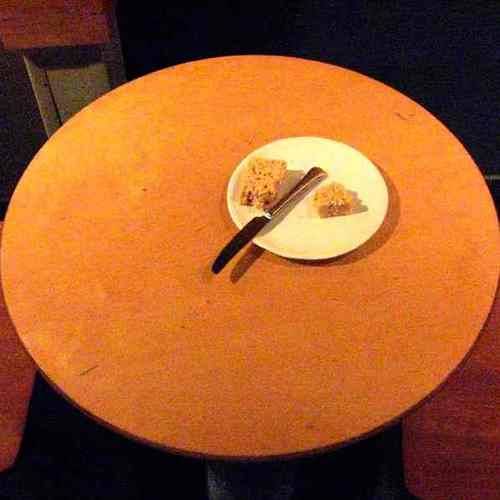
Starbucks table with half-eaten Starbucks treat (c) David Ocker
Mixed Messages posts automatically appear in the right hand column here at Mixed Meters through the miracle of RSS, whatever that is. For a while the Mixed Messages pictures re-sized automatically when they appeared at Mixed Meters - but something changed and I can't fix it. So Mixed Meters readers can only see the left half of every Mixed Messages picture. Click on them to enable the workaround. It's a burden I'm willing to have you bear.

Gradually I settled on two principal categories for Mixed Messages content:
  • my own original pictures
  • music-related quotes which I found amusing (either because of their profundity or because of their utter stupidity. Can you tell the difference? Try it with this one.)

The most popular Mixed Messages post falls into neither category. (It gets a lot of hits from the search engines.)

Many of my Mixed Messages pictures (and hundreds more) can be see at my Flickr Blog.


Message Tags: . . . . . . . . . . . .

Wednesday, May 07, 2008

The Second Second Story Series - Part Three

Today we continue Mixed Meters' exciting series on the 30th anniversary of The Second Second Story Series, four concerts in April & May 1978 produced by the Independent Composers Association (ICA) in Los Angeles. You can read the second Second Second Story Series post here. Read the first one there.

Here is a picture of composer Carl Stone looking up at Mobile 4 John Cage by Jan Greenwald, performed on concert one. The mobile is the score for her piece. At first I thought Carl was holding a drum - but what he's really doing is trying to shine light on the mobile using a lampshade. Lighting was a problem in the venue. This was before Carl started his website Sukathai.com.

Carl Stone with Jan Greenwald's Mobile 4 John Cage Second Second Story Series
Today, May 7, is the anniversary of the third concert. Music by Anna Rubin, Carl Stone, Richard Amromin, Stephen Mitchell, Robert Jacobs, Scott Fraser and someone named DAVE Ocker. (Soon after these concerts I stopped calling myself "Dave" - but I don't object if others choose to call me that. The reason I stopped will require a separate blog post. )

Credit for the pictures in this and the other Second Second Story Series posts goes to Robert Jacobs who is currently living the life of the creative visual artist. He took the color photos with his Polaroid camera. And he saved the black and white ones (photographer unknown) all these years. Please visit Rob's websites at Robert Jacobs Art and Angels of Protection.

There are SO many pictures that I've decided to add at least one extra Second Second posting - probably between now and the last concert (the highly successful series finale) on May 30. Click any picture for an enlarging experience.

Here are composers Scott Fraser (wearing his summery Koss Pro-4AA headphones) and Stephen Mitchell.

Scott Fraser and Stephen Mitchell at Second Second Story Series
PROGRAM THREE - May 7, 1978

TRIX OCARINAS for three ocarinas and percussion (1978) -- Anna Rubin
(world premiere)
ocarinas by Susan Rawcliffe

LIM for magnetic tape (1972) -- Carl Stone

FAIRWEATHER, BELLWETHER, AND AIRMAIL
for magnetic tape (1974) -- Dave Ocker

RHEA
for piano (1967-1978) -- Richard Amromin
(world premiere)

INTERMISSION

LAZULI for magnetic tape (1977) -- Stephen Mitchell

EL DIA for two clarinets and piano (1977) -- Robert Jacobs
(World Premiere)

RECITATION for magnetic tape (1978) -- Scott Fraser

TRIX OCARINAS for three ocarinas and percussion (1978) -- Anna Rubin


The program book for the entire series (which you can download as a pdf here) contains the full program with performers' names, program notes for every piece, composer biographies and other exciting stuff.

Here are composers Anna Rubin (at left) and Susan Palmer and bassoonist Carolyn Beck. Carolyn belonged to the CSUN Contemporary Ensemble which performed on the second concert. Below is a picture of conductor and CSUN professor Daniel Kessner (now retired, I believe).

Anna Rubin, Susan Palmer, Carolyn Beck - Second Second Story Seriesconductor Daniel Kessner - Second Second Story Series
Next is a group shot of seven ICA members on the "stage" of the Center for Yoga. Left to Right: Richard Amromin, Anna Rubin, Dave Ocker, Robert Jacobs, Susan Palmer, Lois Vierk (with improvised eyeglasses) and Stephen Mitchell (on a folding chair separated slightly from the others for reasons unknown.)

ICA members at Center for Yoga - Amromin Rubin Ocker Jacobs Palmer Vierk Mitchell
The next two pictures seem to have been taken at ICA meetings in someone's home or apartment. Going to meetings was the primary activity of an ICA member. We had countless meetings. The first shot shows Stephen Mitchell and Jan Greenwald; the second Lois Vierk and myself.

ICA Members at meeting - Steve Mitchell and Jan GreenwaldICA members at meeting - Lois Vierk and David Ocker


Second Story Tags: . . . . . . . . . . . . . . . . . . . . . . . .

Wednesday, April 30, 2008

The Second Second Story Series - Part Two

Click here to read the first post in my series about the ICA's Second Second Story Series. Click here to skip to the first program later in this post. Click here to skip to the second.

There were four concerts total. Today, April 30, 2008 is the 30th anniversary of the second one. Here is the cover of the program book:

Second Second Story Series 1978 - Program Booklet Cover
You can download the entire program book as a 17 meg. pdf file by clicking this sentence. The booklet is 28 pages. It includs all four programs with complete performer listings, program notes and biographies of each composer and many performers, plus other things common to all program books like advertisements and the full score to Terry Riley's In C on the back cover.

The Center for Yoga was (as I remember) an old lodge hall of some sort. Here are pictures showing the performing area. The first (scanned from a proof sheet) was taken from the balcony. This is a rehearsal of The Scream of a Night-Heron by Susan Palmer - with the violist missing.

Second Second Story Series at Center for Yoga April May 1978
This picture shows the hall from the opposite direction. Composer Scott Fraser is well-posed while listening to playback of a magnetic tape piece. Above him you can see part of the balcony. Behind him are three large leather chairs.

Second Second Story Series 1978 - Scott Fraser
Here's a better view of those chairs - being used by Ganga White of the Center for Yoga and composers Richard Amromin and Scott Fraser again.

Second Second Story Series 1978 - Ganga White, Richard Amromin, Scott Fraser

Here is a polaroid shot (taken by Rob Jacobs) of composers Pauline Oliveros and Anna Rubin. For information about Pauline Oliveros start here. Here's a link for Anna Rubin.

Second Second Story Series 1978 - Pauline Oliveros and Anna Rubin

PROGRAM ONE - APRIL 16, 1978
MUSIC BY WOMEN COMPOSERS

MOBILE 4 JOHN CAGE for 5 radios (1978) -- Jan Greenwald
(world premiere)

SONG FOR THREE CLARINETS (1978) -- Lois Vierk
(world premiere)

CROTCHETS AND CONTRIVANCES for guitar and percussion (1977) -- Carey Lovelace
film by Roberta Friedman

INTERMISSION

SONGS TO DEATH for soprano, cello and piano (1976) -- Anna Rubin
poems by Sylvia Plath


for soprano, 4 clarinets, 4 percussion and glass players (1978) -- Pauline Oliveros


Rob Jacobs kept these pictures in this post safe since 1978. We do not remember the photographer of the black and white shots. More of Rob's own color Polaroid photos will be included in the remaining posts about this series. Rob's recent work as an artist can be found here and here.

Here are composers Susan Palmer and Rob Jacobs. Notice the person reading the program book in the upper right corner. (Click to enlarge any picture.)

Second Second Story Series 1978 - Susan Palmer and Rob Jacobs
PROGRAM TWO - APRIL 30, 1978

PHIELDS for magnetic tape (1977) -- Scott Fraser

THE SCREAM OF A NIGHT-HERON for soprano, fl, cl, bn, vln, vla, vcl (1978) -- Susan Palmer
(world premiere)
Lynn Griebling, soprano
CSUN Contemporary Ensemble, Daniel Kessner, conductor

THINGS IN THE NIGHT
for magnetic tape (1978) -- Stephen Mitchell
(world premiere)

FOUR MINUTES A YEAR
for clarinet/recorder and piano (1978) -- Robert Jacobs
(world premiere)

INTERMISSION

DURATION II for magnetic tape (1976) -- Jan Greenwald

CHAIN-REACTION I (pianos) (1973) -- Drew Lesso
(U.S. Premiere)
Three Time Zones & Resultants
Music Theatre

NONET
for fl, cl, bn, hn, tp, tn, vln, vla, vcl (1975) -- Richard Amromin
the CSUN Contemporary Ensemble, Daniel Kessner, conductor


Here is composer Drew Lesso, on the left looking down at the 1978 video camera, with two other people, preparing for his piece Chain-Reaction I

Second Second Story Series 1978 - Drew Lesso with video camera and others
Here is Chain-Reaction I in performance. For more pictures and information about Chain-Reaction I please click here.


Please tune in to Mixed Meters on May 7 and May 30 for the exciting continuation and conclusion of this series about the Independent Composers Association and The Second Second Story Series.


Second Story Tags: . . . . . . . . . . . . . . . . . . . . . . . .

Monday, April 28, 2008

The Golia LaBerge Ocker Trio

Skip to the video of Vinny Introducing Me
Skip to recordings of the Golia LaBerge Ocker Trio
Skip to a new 30 Second Spot The Nurkle (for Vinny)

The renaming of the CalArts School of Music, as discussed in this previous MM post, has progressed to the Temporary Sign Stage. Here's proof photographic.


The Herb Alpert School of Music at CalArts Temporary Sign
I made another trip to the beautiful Santa Clarita Valley (read about the first trip in this other previous MM post.) Trip one was at the request of my friend Art Jarvinen. Trip two was at the request of my friend Vinny Golia. Here's a picture of Vinny.

Vinny Golia teaches the Career Design course at CalArts
This time I was asked to speak to a class in "Career Design". Don't ask me what that is because I don't know. Apparently students who know what I have done during my so-called career will be able to avoid my obvious mistakes. Good luck with that.

I made the following video of Vinny as he introduced me to the class. I've added a few text comments of my own to the video.


At the end of the introduction Vinny mentions a wind-instrument improvisation trio which consisted of Anne LaBerge on flutes, myself on clarinets, and Vinny on clarinets, flutes and small saxophones. This happened during the eighties.

Vinny Golia, Anne LaBerge, David Ocker
I asked Anne and Vinny for permission to post some recordings of the three of us. They agreed (although Anne wanted me to mention that she is still alive. She has a home in a place called Holland and maintains a homepage in a place called the Internet.)

I've posted three studio improvisations which we recorded in February 1986. We never did anything with the tapes except culling these three takes onto a separate reel for radio interviews. The box is marked "No electronic sound processing" because, apparently, there had been some confusion about how we made the sounds.

This is completely spontaneous unplanned music. It was like a conversation between people with different views on common interests. We are all composers. Vinny and Anne are still explorers of the outer realms of woodwind performance. So was I, back then. We were a good match. I look back on this group with great fondness.

The three improvisations are Copyright (c) 1986 and 2008 by Vinny Golia, Anne LaBerge and David Ocker. Timings #3 - 6'43" #11 4'20" #12 1'48"

Vinny Golia, Anne LaBerge, David Ocker
Our only available pictures as a group come from a photo session proof sheet. These were taken by photographer Joel Mark. I did not ask permission of Vinny or Anne or Joel to post these. I'm the one hiding behind a mostly-not-yet-gray beard and photo-gray glasses. Click any picture for a bit of enlargement. Don't expect much.

Vinny Golia, Anne LaBerge, David Ocker


Vinny Golia, Anne LaBerge, David Ocker
This third improv is actually a duet between Anne and myself. If it sounds like we had been listening to Schoenberg's Pierrot Lunaire, that's because we had. She and I had recently played Pierrot together in a group called The Thirteenth Floor.

Vinny Golia, Anne LaBerge, David Ocker

Vinny Golia, Anne LaBerge, David Ocker
Here's a flyer for a trio concert at a place called BeBop Records. The drawing of the sea lion wearing a pirate hat on which sits a parrot is one of my doodles. If I remember this concert correctly Anne couldn't make it for some reason so it ended up being a duo concert, just Vinny and myself. Anyway, I like the doodle.

Vinny Golia, Anne LaBerge, David Ocker
And finally while I was at CalArts - er, I mean at the Herb Alpert School of Music - for the final time, Vinny had to tell me how to close a piano lid. "You have to retract the nurkle" he explained.

I liked the word "nurkle" although I have no idea what he meant.

I decided that "nurkle" needed to be part of a musical title.


The Nurkle (for Vinny) - (c) Copyright 2008 by David Ocker - 34 seconds


Nurkle Tags: . . . . . . . . . . . . . . . . . . . . . . . . . . . . . .

Saturday, April 26, 2008

The Chowder Jump - Fur or Ball or Red

Using my pocket point-and-shoot I made a short video of one of those wonderful moments of our homelife and dog ownership.

Watch as Leslie bounces the red rubber ball for Chowderhead who, conveniently sun lit, jumps high in the air to catch it while avoiding collision with a potted cactus and eagerly returns the ball to Leslie for a chance to do it all again.

I modified the video a bit to extend the airborne moments.

Then I wrote two sound tracks for the video in such a way that they can be played simultaneously to create a third soundtrack. The three videos below are identical except each has a different soundtrack. They are entitled:
  • Chowder Jump Red
  • Chowder Jump Ball
  • Chowder Jump Fur
The last word of each title is an intentionally non-ordinal identifier. If I had called them "1" "2" and "3" you might have thought that was the proper order to watch them.

There is no proper order. In fact, you don't have to watch them all (or any of them) unless you want to pick a favorite. And we all want to back a winner. Maybe I should have named them:
  • Chowder Jump Clinton
  • Chowder Jump Obama
  • Chowder Jump McCain
No.


I've posted a similar two-separate-pieces-overlaid-to-create-a-third-piece combination before. Click here to read about the "My Dad" pieces. But the mp3s aren't online any longer. Too bad.

Click this sentence to see all Mixed Meters dog posts.

Jump Tags: . . . . . . . . . . . .

Wednesday, April 23, 2008

A Fine Line Between Classical and Parody

Here are three things I've run across lately. They seem to relate.
Click any of these lines to skip to that section.

SoCal Gas Sewer Cover (c) David Ocker
Red Gas Station Storage Tank Cover (c) David Ocker

Offsetting Your Classical Music Footprint

April 18, 2008

NEW YORK CITY, NY--In a late-breaking story, the Wall Street Journal has reported how an entertainment think-tank in Tennessee discovered that investment magnate and cultural aficionado Yo Ma-Ma's attendance at "classical" music events is much higher than the average American's.

Yo Ma-Ma's office's response is that he is reducing his "classical music imprint," in part, by purchasing "classical off-sets," something only recently discussed on National Public Radio and other public media.

The concept is pretty simple: You can figure out how much "classical music" you're hearing every day, and donate an amount of money to an organization building "popular music" venues or supporting emerging indie garage bands in order to offset your "classical" footprint.

For example, TicketMammoth's online calculator will tell you how much your New York Philharmonic ticket "costs" in terms of "classical music emissions," and allows you to add a donation to the price of your bill. The donation then goes to a company that distributes it to musicians producing "populist alternatives."

One such company is PopUrEar, LLC, which funds inner city hip-hop projects, folk music wilderness retreats, and trades renewable goth-metal credits on the Chicago Exchange. TicketMammoth's online calculator suggests that 2100 hours of :classical music played per year on a high-end audiophile system creates over 7,000 pounds of potentially harmful cultural emissions that leak into the atmosphere. Buying a $50 PopUrEarCredit will "offset" that cultural imprint by investing in alternative music sources.

The WSJ article also states there's a lot of fraud quickly popping up, so you just have to research carefully who you're donating to, and how populist the music is that they're actually performing.

So, this is what Yo Ma-Ma does. Much of the market for this seems to be from people saying "I know my love of classical music is culturally elitist, but how in the world can I do anything about it?" It makes them feel better to buy a "classical offset," and it's pretty convenient to just click a donation box online.

--Mark Gresham

Mark Gresham has been an online friend of mine for many years. He writes music, writes about music, publishes music and parodies music from a large urban section of Georgia. His blog is EarRelevant. His other online activities can be found via Mark Gresham Dot Com. He will understand why I picked the particular pictures in this post. No one else will. (Clicken the pictures to enlargen them.)

Mark felt the need to add this postscript to his article:
Hey, people, it's only a SPOOF that I just created, a PARODY of an entirely different article...so laugh and shake it off. I was just in one of those moods today...] :-P
Mark's article reminded me of The Improvising Guitarist's contribution to this ancient Mixed Meters post.

This just in: Robot To Conduct Yo Yo Ma in Detroit (really)


Sewer Man Hole Cover with letter D (c) David Ocker


Musical Compositions Based on Polling Audience Preferences

In this election season no one should need to be reminded that polling of the electorate is a widely practiced black art. It's important for the candidates to know what the populace is thinking. Or, failing that, to know what the pollsters think the populace is thinking.

And remember: as opposed to mere lies or damn lies, statistics can be manipulated to mean pretty much whatever we need them to mean. A candidate goes into an election with an agenda; nothing the populace supposedly thinks is likely to change his mind.

And so it is, apparently, with composers of music.

This blog article Hate This Music - Please! by Yotam Haber at New Music Bachs
led me to this page at UbuWeb about Komar and Melamid & Dave Soldier's The People's Choice Music.

Okay, here's the deal. These guys polled a bunch of other people online about what qualities of music were wanted most and which were wanted least. Then, statistics in hand, Dave Soldier wrote the music described by those preferences - er, well -- he wrote his idea of it.

These pieces are either called "The Most Wanted Song" and "The Most Unwanted Song" or (when you listen to the mp3s) "The Most Wanted Music" and "The Most Unwanted Music".

Here's their description of the most unwanted qualities of music as discovered by this "scientific" research:
The most unwanted music is over 25 minutes long, veers wildly between loud and quiet sections, between fast and slow tempos, and features timbres of extremely high and low pitch, with each dichotomy presented in abrupt transition.

The most unwanted orchestra was determined to be large, and features the accordion and bagpipe (which tie at 13% as the most unwanted instrument), banjo, flute, tuba, harp, organ, synthesizer (the only instrument that appears in both the most wanted and most unwanted ensembles).

An operatic soprano raps and sings atonal music, advertising jingles, political slogans, and "elevator" music, and a children's choir sings jingles and holiday songs.

The most unwanted subjects for lyrics are cowboys and holidays, and the most unwanted listening circumstances are involuntary exposure to commericals and elevator music.

So these musical qualities were used as a precompositional template. A little bit of the post serial compositional method swimming in the swirling oceans of marketing research.

Not surprisingly, I personally kind of liked the Most Unwanted Music. And I hated the Most Wanted Music. A regular Mixed Meters reader would not be surprised.


Round Church Window in Pasadena CA (c) David Ocker


A Scholarly Lecture on the Oeuvre of Petula Clark

After listening to The Wanted and The Unwanted, I roamed UbuWeb until I clicked on the name Glenn Gould - whose talents as performer of baroque music on the piano are widely known and are among my own personal favorite musical works in the entire world. Glenn Gould also was a radio broadcaster. He was also a fan of the pop singer Petula Clark

The bit of Gould I found came from a time long ago (1967) and far away (Canada). A 23-minute CBC radio show, The Search For Pet Clark, comprised only of Gould's talking head, interrupted very occasionally by short snippets of Pet Clark songs, reading a script crammed full of literary and political allusions, ungraphable sentences and metaphors lost in the whirlwinds of time and culture, begins with a travelogue of the land north of the Great Lakes. Here's a sample:
And Marathon and Terrace Bay Gem of the North Shore betray the post-war influx of American capital. Terrace is the Brasilia of Kimberly-Clark's Kleenex/Kotex Ontario operation. The layout of these latter towns, set amidst the most beguiling landscape in central North America, rigorously subscribes to that concept of northern town planning which might be defined as '1984 prefab'. And to my mind provides the source of so compelling an allegory of the human condition as might well have found its way into the fantasy prose of the late Karel Capek.
Quaint, huh? It's certainly not the radio material or DJ delivery we hear these days.

Eventually Glenn gets around to his pet subject. (If you want to know HOW he does that, you can listen to the mp3 yourself.) He dissects his material melodically and harmonically. His assumptions of his listeners' pre-existing knowledge and how quickly they can absorb his text are far removed from contemporary media.

Very far removed. So far removed, in fact, that it's hard to believe such an on-air dialogue ever existed. One has to ask "Was this real?"

I leave you with the words of Glenn Gould:

Now, admittedly, such Schoenbergian jargon must be charily aplied to the carefree creations of the pop scene. At all costs, one must avoid those more formidable precepts of Princetonian Babbittry such as "pitch class" which, since they have not yet forded the Hudson unchallenged, can scarcely be expected to have plied the Atlantic and to have taken Walthamstow studio without a fight.

Nevertheless, Downtown and Who Am I? clearly represent two sides of the same much-minted coin. The infectious enthusiasm of the Downtown motive encounters its obverse in the somnambulistic systematization of the Who Am I? symbol, a unit perfectly adapted to the tenor of mindless confidence and the tone of slurred articulation with which Petula evokes the interminable mid-morning coffee-hour laments of all the secret sippers of suburbia.
a round thing in cement (c) David Ocker
Table Awning Pole Hole (c) David Ocker


Classical Parody Tags: . . . . . . . . . . . . . . . . . . . . . . . .

Wednesday, April 16, 2008

The Second Second Story Series

Recently I found this concert poster for The Second Second Story Series floating in a box of old paper. (Click on the picture for full size viewing and reading.)


I was struck by the dates. The first of the four concerts, on April 16, 1978, was presented exactly thirty ago today. "Ah," I thought "Perfect blog material."

There were four concerts in all. Hopefully I will post more about them as each 30-year anniversary passes. Maybe a pdf of the entire 20-page program book?

The Independent Composers Association or I.C.A. produced the concerts jointly with the venue, a large room on the second floor of an old building where yoga is still taught.

It was our second year of producing concerts. The first year we did a three concert series in Santa Monica in a dance studio above a Radio Shack.

This was the second series of concerts by the ICA and both of them were held on the second floor. Hence the title: The Second Second-Story Series

The poster design was by Ray Jacobs brother of an ICA member, Rob Jacobs. I remember that it won a California design award later that year.

Finally, for the sake of Mr. Google's creepy crawly robots, here's the entire text written out in machine readable ASCII.
The I.C.A. and Larchmont Center present

THE SECOND SECOND STORY SERIES

Sunday, April 16, 1978 ALL WOMEN COMPOSERS Special Guest Composer
PAULINE OLIVEROS

Sunday, April 30, 1978 ELECTRONIC, ACOUSTIC, CHAMBER & SOLO WORKS OF THE 70's
Guest Conductor
DANIEL KESSNER

Sunday, May 7, 1978
ELECTRONIC TAPE & LIVE MUSIC
Sunday, May 28, 1978 CAMBER ORCHESTRA CONCERT Special Guest Composer
TERRY RILEY leading In C

All concerts at
LARCHMONT CENTER
230 1/2 N. Larchmont Blvd. L.A. Second Story. Free Parking.

Located 1/2 block south of Beverly Blvd. Between Gower and Rossmore (Vine St.). ALL CONCERTS BEGIN PROMPTLY AT 8 PM

GENERAL ADMISSION $3.50 STUDENTS $2.50
SERIES SUBSCRIPTION 4 tickets - $12.00 Students -$8.00 Tickets available at Larchmont Center (213) 464-1276

REFRESHMENTS AVAILABLE

The SECOND SECOND STORY SERIES is sponsored jointly by the Independent Composers' Association, Inc. and Larchmont Center for Yoga. The I.C.A. is a non-profit, cultural and educational organization dedicated to the furtherance of contemporary musical art. For further information contact the I.C.A., 7000 Beverly Blvd., LA 90036. Phone 559-7807

Design: Jacobs & Gerber, Partners
Photography: Steve Berman


Second Story Tags: . . . . . . . . . . . . . . . . . . . . . . . .

Friday, April 11, 2008

You Can Pet Dinosaurs

This is the front entrance of the original 1913 building of the Natural History Museum of Los Angeles County. Leslie's job is managing one of the world's largest worm libraries in the basement of this building which is now being refurbished to its former glory. This entrance looks out on the rose garden at Exposition Park.

NHMLAC - Natural History Museum Exposition Park 1913 building
Last Saturday, in the nearly impenetrable bowels of another part of the museum, she gave a public talk on the subject of marine garbage. Knowing attendance might be slim she accepted my offer to attend. Great talk. She's giving another one on April 19th.

Afterwards we were standing in the museum's rotunda - a noisy impressive domed stone-walled space filled with little screaming children and skeletons of the iconic T-Rex/Triceratops prize fight. There's a sculpture of a similar scene outside the museum.

T-Rex and Triceratops fight it out sculpture Natural History Museum of Los Angeles County
At one point, standing there in the tumult, I turned around to see what appeared to be an actual breathing, moving dinosaur coming straight for me. And then another one. I did the obvious thing - I whipped the point-and-shoot out of my pocket, pointed it and shot some video.

I've cobbled the video bits into this 2 minute, 16 second piece. There's no music, so if you hate my compositions watch without fear.


Leslie couldn't tell me too much about these critters. She did know that they came from Australia at great expense. (Here's a YouTube television interview about the capture of a dryosaur in New Zealand.)

I was very impressed with them. I can't find anything on the NHMLAC website about the dinos but it does have this section about Leslie's marine worm collection.

Click the pictures, they get bigger. Hey.

UPDATE: Read about the origin of these creatures HERE!!! (I've corrected this post based on information there. Thanks for this to Steve Howarth who left a comment.)

Dino Tags: . . . . . . . . . . . .

Wednesday, April 09, 2008

The Herb Alpert School of Music

Imagine my great glee to be able to tell people that I have an advanced academic degree from what would eventually be called The Herb Alpert School of Music.

Here's an article in today's L.A. Times on the announcement.

Here's the opening paragraph (since, eventually, you'll have to pay The Times to read that article):
Eight-time Grammy winner and Los Angeles native Herb Alpert, who in November pledged $30 million to UCLA to establish the cross-disciplinary UCLA Herb Alpert School of Music, has now given $15 million to the School of Music at the California Institute of the Arts. In recognition of the gift, to be announced today, the school will be renamed the Herb Alpert School of Music.
(found via)

(picture found via)

Maybe they'll find a way to bring back the Instrumental Pop Tune. Here's an article about how it went away.

Classical Music Tags: . . . . . . . . .

Saturday, April 05, 2008

Foto Buster

FotoBuster mosaic kiosk Altadena CA
In a small run down shopping center in Altadena CA (that's immediately to the north of Pasadena) there is a familiar bit of American architecture - the drive-through kiosk. This one had been a photo developing business named FotoBuster- now out of business. Another vicitim of digital photography. I've driven by this spot dozens of times.

FotoBuster mosaic kiosk Altadena CA
What I never noticed about the FotoBuster kiosk until Friday was the strange and wonderful mosaic decorations of the building. Random odd shapes and bright colors are interrupted by the occasional ceramic face or turtle. Some artist must have spent a long time tiling this little building. I found one online reference to it, this post at the blog L.A. Snapshot.

leave your film here FotoBuster mosaic kiosk Altadena CA
If you're not interested in the kiosk or mosaics it is highly recommended that you try the frozen goodies at Bulgarini Gelato, nestled in a corner of this same shopping center. It's near the corner of Lake and Altadena avenues.

three faces FotoBuster mosaic kiosk Altadena CA
I wonder if there's a word to describe this individualist style of decoration. On Wikipedia the Watts Towers is called "vernacular architecture" - but in this case the actual building is entirely normal, only the tiles are unique. I have no clue who did this or why or what the residents of the area think of it or whether the local preservation groups think it worth preservating.

one face FotoBuster mosaic kiosk Altadena CAfilm drop FotoBuster mosaic kiosk Altadena CA
I'm pretty sure the thing that looks like a cow's head is just residue of the glue from a former sign. Below the picture of the turtle sculpture is a long composite panorama of the north curb of the kiosk. You can see the turtle at the right end. The panorama picture is 10 times wider than it is high. Click any picture for an enlargement.

turtle FotoBuster mosaic kiosk Altadena CA

FotoBuster mosaic kiosk Altadena CA
Tile Tags: . . . . . . . . . . . . . . .