I clicked on a photo feature in the Telegraph about high fashion clothing made from chocolate. One picture attracted my attention because the model is wearing a the dark chocolate nude torso breastplate adorned with f-holes and strings. And breasts. The hat seems to be milk chocolate.
Of course, this is a reference to the famous photo by Man Ray which is possibly the first ever public association of the similar shapes of women and stringed instruments.
I looked for other pictures of women, preferably naked, with f-holes on their bodies. They weren't too hard to find. Here are a few:
Want more? There's an entire gallery of (mostly) women showing off their f-hole tattoos at a site called BMEZINE.
The other pictures came from here and here and here and here.
You can buy f-hole merchandise here.
Want to read another MM post from 2006 where high fashion and musical esoterica are combined? Try Magazine for Renaissance Brass Players. But it's mostly about a tune called Popcorn. And Crazy Frog.
Also of possible interest: Charlotte Moorman, Topless Cellist
F-hole Tags: f-holes. . . tattoos. . . high fashion
Sunday, January 24, 2010
Monday, January 18, 2010
Thursday, January 14, 2010
Placido Domingo: High Culture Meets Pop Culture
I watched The Simpsons last night, an episode entitled Homer of Seville. In one scene Homer is in the locker room of the Springfield Opera House talking to tenor Placido Domingo:
Click this player to hear Homer say it himself:
While other artistic organizations are led by Presidents or CEOs, opera companies tend to have "General Directors". Placido is General Director of both the L.A.Opera and the Washington National Opera. In other words he's the very top dog of these two large opera companies. These two major American cities have entrusted him with their most elite, most European, most sacred, most expensive art form. At the moment neither city has raised enough cash to support it.
Here's a recent L.A.Weekly article about financial problems at L.A.Opera.
Here's a recent Washington Post article about financial problems at the Washington National Opera. which, surprisingly quotes Domingo saying:
I wonder who Placido hires to do his public relations work.
In 2007 Domingo placed fifty-eighth on a list of "Top 100 Living Geniuses" tying with Paul McCartney and Stephen King. (Matt Groening was #3. Dolly Parton was #94.)
The Fly is an American opera for which we have Placido to thank. Here's the NYT review. Here's the LA Times review entitled "Fly commits insecticide"
Placido Domingo and John Denver sing a love duet at The Met:
Bonus video: Placido Domingo sings Carlos Santana
Somewhat related Mixed Meters posts:
The Simpsons and Samuel Barber
Mayor Resigns, Will Move to Italy to Pursue Opera Career
Queen of the Night Lubricant
Prince of the Night
Can Sex Sell the Classics? (The Bill O'Reilly Sexual Harassment Lawsuit Opera)
Click here for all MM posts labeled "Opera".
Pop Opera Tags: Placido Domingo. . . Los Angeles Opera. . . Washington National Opera. . . Homer Simpson
"You know of the three tenors, you're my second favorite. No wait, I forgot about that other guy, sorry you're third."
Click this player to hear Homer say it himself:
While other artistic organizations are led by Presidents or CEOs, opera companies tend to have "General Directors". Placido is General Director of both the L.A.Opera and the Washington National Opera. In other words he's the very top dog of these two large opera companies. These two major American cities have entrusted him with their most elite, most European, most sacred, most expensive art form. At the moment neither city has raised enough cash to support it.
Here's a recent L.A.Weekly article about financial problems at L.A.Opera.
Here's a recent Washington Post article about financial problems at the Washington National Opera. which, surprisingly quotes Domingo saying:
"My big dream was always to have American opera."Here's a recent New York Times article about Placido's too-busy schedule.
I wonder who Placido hires to do his public relations work.
In 2007 Domingo placed fifty-eighth on a list of "Top 100 Living Geniuses" tying with Paul McCartney and Stephen King. (Matt Groening was #3. Dolly Parton was #94.)
The Fly is an American opera for which we have Placido to thank. Here's the NYT review. Here's the LA Times review entitled "Fly commits insecticide"
Placido Domingo and John Denver sing a love duet at The Met:
Bonus video: Placido Domingo sings Carlos Santana
Somewhat related Mixed Meters posts:
The Simpsons and Samuel Barber
Mayor Resigns, Will Move to Italy to Pursue Opera Career
Queen of the Night Lubricant
Prince of the Night
Can Sex Sell the Classics? (The Bill O'Reilly Sexual Harassment Lawsuit Opera)
Click here for all MM posts labeled "Opera".
Pop Opera Tags: Placido Domingo. . . Los Angeles Opera. . . Washington National Opera. . . Homer Simpson
Friday, January 08, 2010
Monday Evening Concerts: Mostly Californian
Last May Sequenza21, a New York music blog, wrote about the retirement of Randy Coleman, a professor of music composition at Oberlin. He described a concert from Oberlin's "glory days" (maybe the late sixties?):

Today I ran across a YouTube video of composer Clint McCallum, that's him on the gun. Some of the things he said made my jaw drop just enough to want to share them here on Mixed Meters. Turns out that McCallum is a student of Randy Coleman. Now I've heard of Randy Coleman twice.
McCallum, clad in black cowboy hat and black t-shirt with the word "Death" on it, is describing his composition for soprano saxophone and piano. The piece is called "In a Hall of Mirrors Waiting to Die." (ah, the t-shirt does make sense) and it will be performed Monday night, January 11, 2010, at the venerable Monday Evening Concerts, a Los Angeles institution which has somehow survived until its seventieth season or so.
Here are Mr. McCallum's words:

This particular MEC concert is called Mostly Californian. The title perplexes me because three out of the five composers are very recent transplants to California, while the others, Anton Webern and Milton Babbitt, have no known relationship to the Pacific coast. Still, MEC is to be commended for even this small attempt at showcasing local talent.
Clint McCallum's home page. When he talks about the "third wall", I suspect he means this. The picture of him on the gun barrel comes from his MySpace page. The picture of the baby on the gun barrel sculpture comes from here via here.
Other MM references to MEC:
In Which David Says Good Riddance to Bad Acoustics
30 Second Spots - The Medallion (sorry, the mp3 of The Medallion is not available. If anyone cares, I'd be happy to repost it. This post prompted my Musical Manifesto)
MEC Tags: Clint McCallum. . . Monday Evening Concert. . . California composers
"...to enter you needed to take a sugar pill with a dot on it...and you rolled the dice, cause 1/3 of the dots were LSD..."I had never heard of Coleman before, but this description made my jaw drop just enough to bookmark the reference.

Today I ran across a YouTube video of composer Clint McCallum, that's him on the gun. Some of the things he said made my jaw drop just enough to want to share them here on Mixed Meters. Turns out that McCallum is a student of Randy Coleman. Now I've heard of Randy Coleman twice.
McCallum, clad in black cowboy hat and black t-shirt with the word "Death" on it, is describing his composition for soprano saxophone and piano. The piece is called "In a Hall of Mirrors Waiting to Die." (ah, the t-shirt does make sense) and it will be performed Monday night, January 11, 2010, at the venerable Monday Evening Concerts, a Los Angeles institution which has somehow survived until its seventieth season or so.
Here are Mr. McCallum's words:
I come from a tradition of avant garde academic composition and so a lot of techniques and a lot of ideas that have inspired me are very heady, very philosophical and very technical. But, there's also a side of my music that's just plain stupid.
He has to hold the same note which is very high at the very top of the range and very loud for a very long time. That adds a whole sense of anticipation for the whole piece. For one, you're wondering, okay, how long can this guy possibly hold this. You see his face get red, he seems to be in pain. On top of that, you're sort of in pain. I mean, it's loud and it's incessant and it won't stop.
By the time things change in the piece, we as listeners kind of are half deafened by this note.
My music, and particularly this piece, I think this is a good example of this, takes tropes of art music. I mean it's written for a concert hall, it's written for a concert audience, and that situation. The way it's written and the way it's performed, over the course of the piece, takes it outside of that. And gets to something that is more visceral but also just more physical and seems maybe not so much concert music anymore. I'm not going to say it's rock music, but there's something there that is breaking down that third wall.
It's not important to me whether the audience enjoys my music or not. But that is purely for the reason that as a listener I have found the most meaning in music comes from music that has challenged me, that has challenged my sense of self and my self of aesthetics. And if musicians had worried too much about whether I was going to enjoy the music they were playing for me, I never would have had these experiences where music literally changed me, where it literally changed my life.
So I have to approach music the same way because I do want my music to change lives.
This particular MEC concert is called Mostly Californian. The title perplexes me because three out of the five composers are very recent transplants to California, while the others, Anton Webern and Milton Babbitt, have no known relationship to the Pacific coast. Still, MEC is to be commended for even this small attempt at showcasing local talent.
Clint McCallum's home page. When he talks about the "third wall", I suspect he means this. The picture of him on the gun barrel comes from his MySpace page. The picture of the baby on the gun barrel sculpture comes from here via here.
Other MM references to MEC:
In Which David Says Good Riddance to Bad Acoustics
30 Second Spots - The Medallion (sorry, the mp3 of The Medallion is not available. If anyone cares, I'd be happy to repost it. This post prompted my Musical Manifesto)
MEC Tags: Clint McCallum. . . Monday Evening Concert. . . California composers
Tuesday, January 05, 2010
Andy Warhol's Essential Elements of Gracious Living
Fine music:

Fine dining:
Fine art:

All items found here.
Here's the text of the first picture:
Andy Tags: Andy Warhol. . . Burger King. . . Cash for your Warhol. . . Pioneer Stereo

Fine dining:
Fine art:

All items found here.
Here's the text of the first picture:
Andy Warhol doesn't play second base for the Chicago Cubs.Philip Glass enjoys a Cutty Sark
He doesn't even know who does. But he's a man of many talents and interests - art, music, movies, literature - in fact, everything that's exciting in the world around us today.
You know him for his Campbell's soup can ... camp ... the Velvet Underground ... Heat ... Lou Reed. He knows which high fidelity system does the best job in the world of perfect sound reproduction. That's why Andy owns Pioneer.
Andy Tags: Andy Warhol. . . Burger King. . . Cash for your Warhol. . . Pioneer Stereo
Sunday, December 27, 2009
Could Terry Riley's In C Be Accepted As Classical Music
Minimalism, as a musical style, has produced a clubby group of composers. Earlier this year some of them held the Second International Conference on Minimalist Music. In blog posts from their conference I learned of a new book about one particularly classic piece of minimalism: In C by Terry Riley.
This thin book, Terry Riley's In C by Robert Carl, is interesting mostly for the information about the composer's early life and the events surrounding the creation, performance and initial recording of his famous 1964 work. Carl's musical analysis and reviews of various recordings are less involving.

In C is a genuine classic piece of music of our time. By "our" I mean baby boomers. In those days when many of us encountered this style of music for the first time ("minimalism" wasn't the default term yet), it seemed like an endless open vista wherein anything might be possible.
In C was hugely important in my own personal development as a musician. You can no longer hear this in my current music but it was quite obvious back in my "first compositional period" (before I temporarily gave up writing in the early 90's).
In the 70's, when I was studying weird new music at CalArts, I used to come home at night exhausted from music by the likes of Stockhausen, Cage or Carter and relax by listening to the original Columbia recording of In C with the little electronic whoosh marking the split between side A and side B. Some evenings I listened to it all the way through twice or three times, all 40-some minutes of it.
Of course being a little stoned didn't hurt - but wasn't required. The music had a positive, heady power; so much energy. It carried me along. It was completely different from the dry new music which dominated my graduate education. More importantly I was totally amazed by two important qualities of In C: its structural simplicity and its social egalitarianism. I still am.
SIMPLE
In C is actually a kind of orchestra piece. Riley suggests about 35 players as the optimum number, although it has been done with many fewer or many more. In an interview he said that it might be played solo if the right player could be found. Good luck with that. It works well as a chamber piece for seven or eight very busy players.
With big ensembles In C challenges the notion that large symphonic works need huge over-notated scores filled with inaudible precision. The entire score fits on one letter size sheet of paper. A conventional orchestra score of similar length might have as many as 200 densely packed pages.
Obviously this seems more important to a person who has spent his entire career dealing with printed musical notation than it does to you. If such simplicity had become the norm rather than a single exception I might have had to find myself a different line of work.
Riley's composition allows only a few written notes to produce a highly complex texture every bit the equal of more precisely written pieces. It comes out differently every time - but it is never so different that you can't identify it immediately. This simplicity is a worthy and all-too-rare quality of contemporary music.
Originally the instructions on how to play that one small sheet of music were handed down verbally from musician to musician. Years later Riley added some text instructions codifying the performance practice - although he still seems pretty loose about the rules.
Here is the full orchestra score of In C. You can download a better looking pdf along with the instructions from Otherminds.

EGALITARIAN
The other important, mind-blowing idea which In C represented to me is its complete revolution in the social structure of the orchestra.
In a conventional orchestra the most-important person (i.e. the "conductor") dictates behavior from above. He stands alone, elevated on a podium. Meanwhile, down among the players, there is a formal pecking order. For example, the principal players, the ones who get the solos, are ranked higher than the garden variety section players. They get paid more too.
Of course this hierarchical arrangement is endemic throughout our society. Most people experience it constantly - at work, in school or in a family. Orchestra hierarchy bothered me a lot when I was a student. It still does, but not so much.
Riley has constructed In C so that the artistic responsibilities of the conductor - plus a large chunk of the composer's job as well - are distributed among all the players. His simple rules allow great freedom to be spread among many equal participants.
The performers stay together by listening to a steady pulse instead of by watching a conductor. This is not unlike playing with a metronome. Each player makes a continuous stream of artistic choices, unprecedented freedom for an orchestral musician. Riley stresses that all the players must listen carefully to properly fulfill their responsibilities. Their decisions matter to the final result.
Using only musical notes and musical structures In C eloquently speaks against the orchestral chain of command. It's my hope that performances of In C preserve and promote these laudable political and social principles.
These days In C has a certain dated sixties aura of utopian hippy anarchist communes about it. Cool, huh? There's no reason that feeling can't invade the world of classical music once in a while.
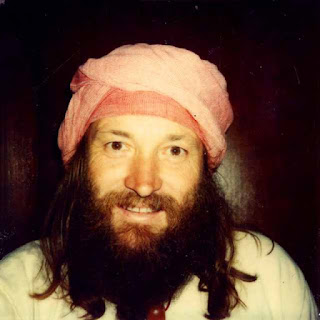
Very large ensemble performances of In C, which are often the very high profile ones as well, seem to lose this political message. The argument is made that some hierarchy must be introduced to avoid cacophony.
A recent celebration at Carnegie Hall celebrated the 45th anniversary of In C's composition with a large ensemble (about 70 players) which, according to the N.Y. Times, was led by a:
I fantasize that someday In C will be programmed on regular orchestra concerts. Yes, getting this piece into the standard repertory is a long ways off. If it happened, In C would change from a "minimalist classic" into an actual piece of classical music. That would provide strong evidence that classical music has some life left in it.
A chamber orchestra would be just the right size. Before the intermission the program could be, maybe, a Rossini overture and a Mozart concerto. And the second half would be a 35-minute performance of In C employing all the performers from the first half. Great concert! Of course, during In C the conductor should sit in the ensemble and play an instrument, provided he or she is capable. Otherwise tell the conductor to sit in the audience.
Now in 2009, with the history of minimalism nearing an inevitable end, conventions held, books published, courses taught, I can see how unique In C really is. Other orchestral music of recent decades has remained complex and hierarchical by comparison. No tradition of ultra-simplicity has appeared among other composers. Quite the opposite. Nothing about orchestra music - or music composition in general - challenges the structure of society. Quite the opposite.
By its very uniqueness and originality, In C deserves to be widely performed and discussed. It could easily be added to the classical canon. That revered list of works would benefit from adding this bright spot of sixties counterculture to the morass of 19th century romantic orchestral muck.

Here's an LA Weekly interview with Terry Riley.
Listen to WNYC's New Sounds show, interview with Terry Riley and David Harrington.
A print interview entitled "A Stoned Mozart?" with Terry Riley and David Harrington
You can read chapter one of Robert Carl's book here. For me, re-reading it made me want to relisten to the original recording of In C. I hadn't heard it in a very long time. But I couldn't find my LP from back in the Seventies. My friend Paul Bailey once told me that it wasn't a good performance. I scoffed. I ordered another LP via the Internet, an LP rather than a CD so I could hear the whoosh - the electronic sound which abruptly reminds you to turn the record over. I listened to it once. Paul was absolutely right - the performances sucks. You can listen to two recent chamber performances led by Paul here.
I performed In C many times, including at one particularly memorable I.C.A. concert in 1978 with the composer himself in the ensemble.
Other Mixed Meters attacks on the classics:

This thin book, Terry Riley's In C by Robert Carl, is interesting mostly for the information about the composer's early life and the events surrounding the creation, performance and initial recording of his famous 1964 work. Carl's musical analysis and reviews of various recordings are less involving.

In C is a genuine classic piece of music of our time. By "our" I mean baby boomers. In those days when many of us encountered this style of music for the first time ("minimalism" wasn't the default term yet), it seemed like an endless open vista wherein anything might be possible.
In C was hugely important in my own personal development as a musician. You can no longer hear this in my current music but it was quite obvious back in my "first compositional period" (before I temporarily gave up writing in the early 90's).
In the 70's, when I was studying weird new music at CalArts, I used to come home at night exhausted from music by the likes of Stockhausen, Cage or Carter and relax by listening to the original Columbia recording of In C with the little electronic whoosh marking the split between side A and side B. Some evenings I listened to it all the way through twice or three times, all 40-some minutes of it.
Of course being a little stoned didn't hurt - but wasn't required. The music had a positive, heady power; so much energy. It carried me along. It was completely different from the dry new music which dominated my graduate education. More importantly I was totally amazed by two important qualities of In C: its structural simplicity and its social egalitarianism. I still am.
SIMPLE
In C is actually a kind of orchestra piece. Riley suggests about 35 players as the optimum number, although it has been done with many fewer or many more. In an interview he said that it might be played solo if the right player could be found. Good luck with that. It works well as a chamber piece for seven or eight very busy players.
With big ensembles In C challenges the notion that large symphonic works need huge over-notated scores filled with inaudible precision. The entire score fits on one letter size sheet of paper. A conventional orchestra score of similar length might have as many as 200 densely packed pages.
Obviously this seems more important to a person who has spent his entire career dealing with printed musical notation than it does to you. If such simplicity had become the norm rather than a single exception I might have had to find myself a different line of work.
Riley's composition allows only a few written notes to produce a highly complex texture every bit the equal of more precisely written pieces. It comes out differently every time - but it is never so different that you can't identify it immediately. This simplicity is a worthy and all-too-rare quality of contemporary music.
Originally the instructions on how to play that one small sheet of music were handed down verbally from musician to musician. Years later Riley added some text instructions codifying the performance practice - although he still seems pretty loose about the rules.
Here is the full orchestra score of In C. You can download a better looking pdf along with the instructions from Otherminds.

EGALITARIAN
The other important, mind-blowing idea which In C represented to me is its complete revolution in the social structure of the orchestra.
In a conventional orchestra the most-important person (i.e. the "conductor") dictates behavior from above. He stands alone, elevated on a podium. Meanwhile, down among the players, there is a formal pecking order. For example, the principal players, the ones who get the solos, are ranked higher than the garden variety section players. They get paid more too.
Of course this hierarchical arrangement is endemic throughout our society. Most people experience it constantly - at work, in school or in a family. Orchestra hierarchy bothered me a lot when I was a student. It still does, but not so much.
Riley has constructed In C so that the artistic responsibilities of the conductor - plus a large chunk of the composer's job as well - are distributed among all the players. His simple rules allow great freedom to be spread among many equal participants.
The performers stay together by listening to a steady pulse instead of by watching a conductor. This is not unlike playing with a metronome. Each player makes a continuous stream of artistic choices, unprecedented freedom for an orchestral musician. Riley stresses that all the players must listen carefully to properly fulfill their responsibilities. Their decisions matter to the final result.
Using only musical notes and musical structures In C eloquently speaks against the orchestral chain of command. It's my hope that performances of In C preserve and promote these laudable political and social principles.
These days In C has a certain dated sixties aura of utopian hippy anarchist communes about it. Cool, huh? There's no reason that feeling can't invade the world of classical music once in a while.

Very large ensemble performances of In C, which are often the very high profile ones as well, seem to lose this political message. The argument is made that some hierarchy must be introduced to avoid cacophony.
A recent celebration at Carnegie Hall celebrated the 45th anniversary of In C's composition with a large ensemble (about 70 players) which, according to the N.Y. Times, was led by a:
“flight pattern coordinator,” [who] used flash cards and hand signals to shape the sprawl.Mark Swed, in his review of a performance by 124 musicians from CalArts (at Disney Concert Hall in 2006) wrote:
David Rosenboom, the violist on the historic first recording of the piece, conducted. ... Rosenboom more carefully molded it, indicating when sections should begin changing figures lest so large an orchestra seem chaotic. ... When the longest and most harmonically complex figure (No. 35) dominated, Rosenboom emphasized the brass, and the score sounded like the end of Wagner's "Das Rheingold" writ large and Postmodern.In 2000 Michael Tilson Thomas conducted a performance by the San Francisco Symphony to which anyone could bring an instrument and join in. Sarah Cahill, in her review of the concert, wrote:
His actions were absolutely antithetical to the democratic concept of the piece.Instead of using conductors or flight controllers or referees to control a too-large group, wouldn't it be simpler to find a solution which respects the essential "every player is equal" theme. You could tell all the players to limit their playing by a certain percentage. If the number of musicians is double the optimum number, tell them to play only half the time. Simple. Even simpler: if you insist on doing this piece with too many players, you should be prepared to accept chaos. What's wrong with a little chaos? Either way, the decision of who-plays-when remains an egalitarian one. Each member of the ensemble gets an equal say and the social statement of In C, the part I find meaningful, is preserved.

I fantasize that someday In C will be programmed on regular orchestra concerts. Yes, getting this piece into the standard repertory is a long ways off. If it happened, In C would change from a "minimalist classic" into an actual piece of classical music. That would provide strong evidence that classical music has some life left in it.A chamber orchestra would be just the right size. Before the intermission the program could be, maybe, a Rossini overture and a Mozart concerto. And the second half would be a 35-minute performance of In C employing all the performers from the first half. Great concert! Of course, during In C the conductor should sit in the ensemble and play an instrument, provided he or she is capable. Otherwise tell the conductor to sit in the audience.
Now in 2009, with the history of minimalism nearing an inevitable end, conventions held, books published, courses taught, I can see how unique In C really is. Other orchestral music of recent decades has remained complex and hierarchical by comparison. No tradition of ultra-simplicity has appeared among other composers. Quite the opposite. Nothing about orchestra music - or music composition in general - challenges the structure of society. Quite the opposite.
By its very uniqueness and originality, In C deserves to be widely performed and discussed. It could easily be added to the classical canon. That revered list of works would benefit from adding this bright spot of sixties counterculture to the morass of 19th century romantic orchestral muck.

Here's an LA Weekly interview with Terry Riley.
Listen to WNYC's New Sounds show, interview with Terry Riley and David Harrington.
A print interview entitled "A Stoned Mozart?" with Terry Riley and David Harrington
You can read chapter one of Robert Carl's book here. For me, re-reading it made me want to relisten to the original recording of In C. I hadn't heard it in a very long time. But I couldn't find my LP from back in the Seventies. My friend Paul Bailey once told me that it wasn't a good performance. I scoffed. I ordered another LP via the Internet, an LP rather than a CD so I could hear the whoosh - the electronic sound which abruptly reminds you to turn the record over. I listened to it once. Paul was absolutely right - the performances sucks. You can listen to two recent chamber performances led by Paul here.
I performed In C many times, including at one particularly memorable I.C.A. concert in 1978 with the composer himself in the ensemble.
Other Mixed Meters attacks on the classics:
- Everybody Loves Beethoven (Probably) - a classical composer name recognition poll
- One Goldberg Equals Twelve Abbas - a scale to measure how interesting music is
- A Fine Line Between Classical and Parody - Musical Offsets; Wanted & Unwanted Music; Glenn Gould on Petula Clark
- Me and Mahler, Me and Iowa - How I outgrew Mahler's music
- Combining Four Letter Words: Oboe + Blog - Dies Irae and Hip Hop
- A New Rhapsody in Blue - yes, with actual improvisation
- If Music Be The Food of Love - which musics are dead, which are just dying
- David Ocker, Boy Music Critic - can't get enough Domenico Scarlatti
- The Docker Award for Mainstream Avant Garde Music - BBC Orchestra plays Cage badly
- Paradise, Pomp and Puppets - the LA Phil, Hungarian Radio Orch. and Berkeley Symphony perform music by Frank Zappa
- Mingus Epitaph - how jazz became classical one night at Disney Hall
- Sonata Heaven - about sculpting music out of the sounds all around you

A Harvard Business School study looked at job satisfaction. Orchestra players came just below prison guards. Chamber musicians came in at number 1. What’s the difference? The presence of a conductor. Conductor Ben Zander quoted here.
Saturday, December 26, 2009
Similarities and Differences

I have no explanation for the first one or the second one. The third one is a set of dog food ads.
Similarly Different Tags: white beard. . . albert einstein cartoon. . . Cesar dogfood pictures
Sunday, December 20, 2009
Speaking Fluent GIbberish
Sid Caesar used to do comedy sketches where he'd pretend to speak a foreign language like German or Japanese. It was funny but of course it was completely meaningless to people who actually spoke those languages.
Here's a video of an Italian singer Adriano Celentano doing exactly the same thing to English. This is what we sound like to them. The song is called Prisencolinensinainciusol. (If you want more, the color bits of this video come from this clip. There's a more recent Italian TV performance here. But to watch those two clips it would be helpful to actually speak Italian.)
Leslie saw this video and said "Good use of mirrors." Found via WFMU Beware the Blog
ADDENDUM: Some helpful soul has decoded the lyrics of this song and added subtitles. You can find out what he's singing about here. National Twosome.
Here's a Mixed Meters post which features another unknown-to-America Italian artist: Osvaldo Cavandoli of La Linea fame. (Watch the video.)
Prisencolinensinainciusol Tags: gibberish. . . Adriano Celentano
Here's a video of an Italian singer Adriano Celentano doing exactly the same thing to English. This is what we sound like to them. The song is called Prisencolinensinainciusol. (If you want more, the color bits of this video come from this clip. There's a more recent Italian TV performance here. But to watch those two clips it would be helpful to actually speak Italian.)
Leslie saw this video and said "Good use of mirrors." Found via WFMU Beware the Blog
ADDENDUM: Some helpful soul has decoded the lyrics of this song and added subtitles. You can find out what he's singing about here. National Twosome.
Here's a Mixed Meters post which features another unknown-to-America Italian artist: Osvaldo Cavandoli of La Linea fame. (Watch the video.)
Prisencolinensinainciusol Tags: gibberish. . . Adriano Celentano
Tuesday, December 15, 2009
Crash Bang Boom
I looked for music-related old-time school instructional videos on the site http://www.avgeeks.com
I found this one. It's really annoying. Also mesmerizing. Also incredibly stupid. It's called Crash, Bang Boom. Learn about percussion instruments (and there's a rock band to watch and a chorus to listen to):
Here are the credits:
As a bonus, but only of tangential relevance, here's a more dramatic, less educational MM favorite: Music for One Apartment and Six Drummers:
(This vid doesn't load? Click here.)
The subject of Musical Instruments comes up rather often on Mixed Meters. Click here. Don't expect anything educational.
Crash Bang Boom Tags: instructional video. . . percussion
I found this one. It's really annoying. Also mesmerizing. Also incredibly stupid. It's called Crash, Bang Boom. Learn about percussion instruments (and there's a rock band to watch and a chorus to listen to):
Here are the credits:
Copyright (c) MCMLXX by Eric Productions
Produced by Eric Productions
Richard Jackson
Dale Jergenson
As a bonus, but only of tangential relevance, here's a more dramatic, less educational MM favorite: Music for One Apartment and Six Drummers:
(This vid doesn't load? Click here.)
The subject of Musical Instruments comes up rather often on Mixed Meters. Click here. Don't expect anything educational.
Crash Bang Boom Tags: instructional video. . . percussion
Friday, December 11, 2009
Classical Music Sells Out
Here's a list. Go ahead, take a guess what it is.
If you're the sort of classical musician who isn't bothered by this I suggest you watch Bond (a high-heeled string quartet, #10 above) perform this excerpt from a well-known classical warhorse. Be sure to listen at least until the drums enter.
Sales Tags: Billboard charts. . . top classical artists. . . death of classical music
- Josh Groban
- Andrea Bocelli
- Il Divo
- Charlotte Church
- Sarah Brightman
- Yo-Yo Ma
- The Baby Einstein Music Box Orchestra
- Luciano Pavarotti
- London Symphony Orchestra
- Bond
- Russell Watson
- Andre Rieu
- John Williams
- Paul Potts
- Joshua Bell
- Mormon Tabernacle Choir
- Sting
- Renee Fleming
- Hayley Westenra
- Placido Domingo
- Amici Forever
- Richard Joo
- Daniel Rodriguez
- Celilia Bartoli
- Ronan Tynan
If you're the sort of classical musician who isn't bothered by this I suggest you watch Bond (a high-heeled string quartet, #10 above) perform this excerpt from a well-known classical warhorse. Be sure to listen at least until the drums enter.
Sales Tags: Billboard charts. . . top classical artists. . . death of classical music
Tuesday, December 08, 2009
Shard by Elliott Carter - doubled
Shard is a solo guitar piece by famous high-modernist centenarian New York composer Elliott Carter who writes not-my-favorite music. To me it sounds difficult and not much else.
Here are two versions from You Tube. If played simultaneously they produce a curious phasing synchronization - a mad mad improvisation.
INSTRUCTIONS: Start the top video first. When it gets to 5 or 6 seconds start the second. You might need to let both videos load completely first. The vagaries of Internet speed may affect your personal experience.
Watch the players faces for best effect.
If you have trouble with this, you might try this link instead where the two will start automatically. Good luck.
The separate videos are here and here.
Thanks to Tom Brodhead for sending me the link to performer two. He compared the experience of listening simultaneously with the nausea of radiation therapy.
Shard Tags: Shard. . . Elliott Carter. . . solo guitar
Here are two versions from You Tube. If played simultaneously they produce a curious phasing synchronization - a mad mad improvisation.
INSTRUCTIONS: Start the top video first. When it gets to 5 or 6 seconds start the second. You might need to let both videos load completely first. The vagaries of Internet speed may affect your personal experience.
Watch the players faces for best effect.
| YouTube Doubler |
If you have trouble with this, you might try this link instead where the two will start automatically. Good luck.
The separate videos are here and here.
Thanks to Tom Brodhead for sending me the link to performer two. He compared the experience of listening simultaneously with the nausea of radiation therapy.
Shard Tags: Shard. . . Elliott Carter. . . solo guitar
Subscribe to:
Posts
(
Atom
)