Today is Memorial Day, in which we remember those who have died in wartime.
I took this picture in South Pasadena. There are plaques for servicemen who died in Vietnam just off Fair Oaks Boulevard in War Memorial Park. Terry Brooks Dyer appeared to be the youngest of a small handful.
This man was less than one year older than I. He was killed less than one year after he would have graduated high school. Of course I didn't know him, but seeing this memorial to him made me very sad. War is followed by lifetimes of might-have-beens.
Someone needs to remind me why we fought in Vietnam. Would anything today be different if we had won?
Memorial Tags: Memorial Day. . . South Pasadena. . . Terry Brooks Dyer
Monday, May 31, 2010
Saturday, May 29, 2010
Listen to Wagner's Entire Ring Cycle in One Second
Today is the first performance of L.A. Opera's complete production of Richard Wagner's endless four-opera cycle The Ring of the Nibelung.
Yesterday L.A. Opera announced that ticket sales for the Ring cycles are not meeting expectations. Their overall budget is falling another million dollars short. Maybe a million and a half. Their excuses include the volcano in Iceland. Personally I think the Gods must be angry. (Read the financial story at the L.A. Times)
The Opera is also holding Ring Festival L.A., a favorite topic at Mixed Meters. You can read about it here and here and here and here and here. Or not.
This post is my contribution to Ring Festival L.A. They're not likely to be thrilled. It is inspired by the work of one California composer who, almost 50 years ago, dealt conceptually with the problem of Wagner's Ring. I gather that his idea was never completely realized in sound. Maybe this is the first time.
From 1962 through 1966 there was a flowering of avant garde music right here in California at a place called the San Francisco Tape Music Center. It was a labor of love by a small group of young composers who existed in the vortex of counter-culture energy and revolution which, only a few years later, would give us Flower Power, the Summer of Love and the Grateful Dead.
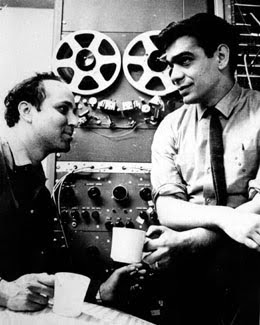
One of the founders of the SFTMC was Ramon Sender. As a student I remember reading how Sender had used a tape recorder to reduce all of Wagner's Ring to four short clicks. I assumed he would have done this by recording at a very slow speed and playing the tape back very fast. Unfortunately, I don't remember where I read this; it was just a short reference. Clearly the idea stuck in my brain. (Update: See note from Sept. 2012 below.)
Recently I discovered a fascinating book called The San Francisco Tape Music Center, 1960s Counterculture and the Avant-Garde edited by David W. Bernstein. It includes interviews with the principals of SFTMC: composers, performers, equipment designers, dancers and light show artists. Here's part of the interview with Ramon Sender. He is discussing a very early three-head Ampex tape recorder:
Given the limited frequency response of his equipment, Sender's comment about helping students is an obvious joke. In my mind, however, it is an admirable goal. The students probably didn't really want to listen to the Ring in the first place. I say hooray for audio Cliff's notes.
Sender is also careful to say he did this only with "a Wagner opera" not with the entire Ring. My best guess is that reducing the Ring of the Nibelung to four clicks, as reported in that book I read, was always a concept. Sender's conceptual piece is easy to imagine and very communicative artistically, but at that time it was probably not worth the energy to turn it into actual audio.
As you can well imagine, I really like Ramon Sender's idea of compressing the Ring until it simply evaporates into a whiff of meaningless noise. The problem of Wagner's excessively long music is solved.
In the sixties creative forward-looking musicians worked with early analog tape recorders and even earlier analog synthesizers and dreamed of an entirely new type of music. In nearly every respect the music they dreamed up was completely unlike Wagner.
They were inspired by the new electronic tools at their disposal. Maybe in their wildest, wildest dreams they imagined analog equipment would someday be supplanted by digital devices. Could they have imagined that digital technology would become so ubiquitous and so portable and so powerful that anyone could accomplish the most complex audio editing almost anywhere. If they did imagine that, then they probably didn't believe they'd live to see the day. Turns out, they did.
In 2010 speeding up the entire Ring until it becomes four quick clicks is a rather trivial exercise. I did it - and so could you - using the free program Audacity (highly recommended). I repeatedly doubled the speed of each opera. Just as with an analog tape machine, each doubling halves the length of the music and doubles the frequency, raising the pitch by one octave. After about six octaves all resemblance to the original music disappears and only noise created by the inherent limitations of the equipment remains.
I repeated this process sixteen times. The final length is 1/1024th of the original. Each opera lasts about a quarter of a second. You'll be able to hear all four clicks in one second. Theoretically the notes are sixteen octaves higher than the original. With perfect fidelity the lowest audible frequency would have been transformed to over a half million cycles per second. That is in the range of AM radio. In reality nothing of Wagner remains. Instead of a time-saving subliminal way listen to Wagner, this process has simply removed all the content from his music. Another problem solved.
Click here once to hear the entire Ring cycle as four clicks. It'll only take a second.
Recreating the tricks of old analog tape equipment is far from the only use for digital audio. You can also manipulate sounds in ways which were inconceivable with analog equipment. For instance, with digital audio you can change the pitch of music without changing the duration. A good example of this, from pop music, would be AutoTune. You can also change speed without changing pitch. Making music slower is the idea behind 9 Beet Stretch which turns a seemingly interminable piece into an unbearably interminable one.
And, by making music faster, you can compress all of Wagner's Ring into a few minutes leaving mere hints of the original content. That's what I've done. Naturally a tremendous amount of musical information has been lost but you can still hear Wagner in there somewhere.
For this realization I did seven halvings of the length of the Ring, making it 1/128th the length, keeping the pitches unchanged. The result remains well within the frequency response of modern technology. You can identify the occasional tonality, distinguish voices and instruments, hear loud and soft sections and generally get a feel for the flow of the music. But it remains gobbelty-gook. No way to solve that problem.
Click here to listen to the entire Ring cycle in seven minutes.
THE PROBLEM OF WAGNER'S RING
Wagner's Ring is not a "problem" for opera queens and ring nerds. More power to them. But it can be a huge issue for an avant garde composer trying to face the unknown future of music who resents being pursued from behind by the continuing popularity and influence of this massive and vicious Romantic era monster. Not all composers acknowledge the problem; not all composers are interested in the future. Many are happy to imitate Wagner as best they can in hopes of getting their own operas performed. Or of getting work writing movie scores.
Actually, I suspect most composers are simply oblivious. They don't care about Wagner at all. Much more power to them.
I'd like to end with a quote about Wagner's excessive influence as expressed by a composer who lived much closer to Wagner's time and is now regarded as one of the all-time greatest creative musical minds. It was a time when Wagner was at the peak of his musical importance and the problem of finding a new non-Wagnerian future was most acute.
=-=-=-=-
After Leslie listened to the four clicks she remarked that some people might find even this version too long.
The transformational idea behind multiple octave changes reminds me of Frank Zappa's Big Note.
My own deconstruction of Wagner - or at least his one and only real contribution to pop culture - is called Wagner and Schubert Have Intercourse.
Read about Burlesque of Nibelung which apparently happened a little over a month ago in downtown L.A. Billed as "a naughty night of mythology, opera and high-brow burlesque hi-jinks", I suspect it's another unauthorized Ring Festival L.A. celebration.
ADDENDUM: I confess, the "Four Clicks" are not so much clicks as bursts of white noise. But I distinctly remember that early book reference called the sounds "clicks" and I have kept the term.
September, 2012 ADDENDUM: Thanks to Tom Service of the Guardian for linking to this post.
My original encounter with the idea of reducing Wagner, including the word clicks, is now available online. It was from an article by Pauline Oliveros entitled Some Sound Observations, published originally in issue 3 of Source: Music of the Avant-Garde, 1966-1973 (page 136 of a 2011 reprint by UC Press and readable on Google.) Here's what she wrote:
3-Head Tags: Richard Wagner. . . Ring of the Nibelung. . . LA Opera. . . Ring Festival LA. . . Ramon Sender. . . San Francisco Tape Music Center. . . analog tape recorder
Yesterday L.A. Opera announced that ticket sales for the Ring cycles are not meeting expectations. Their overall budget is falling another million dollars short. Maybe a million and a half. Their excuses include the volcano in Iceland. Personally I think the Gods must be angry. (Read the financial story at the L.A. Times)
The Opera is also holding Ring Festival L.A., a favorite topic at Mixed Meters. You can read about it here and here and here and here and here. Or not.
This post is my contribution to Ring Festival L.A. They're not likely to be thrilled. It is inspired by the work of one California composer who, almost 50 years ago, dealt conceptually with the problem of Wagner's Ring. I gather that his idea was never completely realized in sound. Maybe this is the first time.
BACKGROUND
From 1962 through 1966 there was a flowering of avant garde music right here in California at a place called the San Francisco Tape Music Center. It was a labor of love by a small group of young composers who existed in the vortex of counter-culture energy and revolution which, only a few years later, would give us Flower Power, the Summer of Love and the Grateful Dead.
One of the founders of the SFTMC was Ramon Sender. As a student I remember reading how Sender had used a tape recorder to reduce all of Wagner's Ring to four short clicks. I assumed he would have done this by recording at a very slow speed and playing the tape back very fast. Unfortunately, I don't remember where I read this; it was just a short reference. Clearly the idea stuck in my brain. (Update: See note from Sept. 2012 below.)
Recently I discovered a fascinating book called The San Francisco Tape Music Center, 1960s Counterculture and the Avant-Garde edited by David W. Bernstein. It includes interviews with the principals of SFTMC: composers, performers, equipment designers, dancers and light show artists. Here's part of the interview with Ramon Sender. He is discussing a very early three-head Ampex tape recorder:
I discovered that there was a tension adjustment on the reels. You could actually put it in "record" mode, not turn on the track to travel, but just put on the tension adjustment, and the tape would creep very slowly. That was when I started doing things like putting all of a Wagner opera on an eighth of an inch of tape. I thought, wow I could sell this to conservatory students to help them do their assignments. You want to listen to the Ring of the Nibelung? Here, you can do it in a quarter of a second.Fascinating! Of course it's not as simple as he makes it seem. First of all, tape moving that slowly on an analog tape recorder, the equivalent of 1 inch per day, would have no usable signal recorded on it. When playing it back there would be all noise, a signal to noise ratio of zero.
Given the limited frequency response of his equipment, Sender's comment about helping students is an obvious joke. In my mind, however, it is an admirable goal. The students probably didn't really want to listen to the Ring in the first place. I say hooray for audio Cliff's notes.
Sender is also careful to say he did this only with "a Wagner opera" not with the entire Ring. My best guess is that reducing the Ring of the Nibelung to four clicks, as reported in that book I read, was always a concept. Sender's conceptual piece is easy to imagine and very communicative artistically, but at that time it was probably not worth the energy to turn it into actual audio.
As you can well imagine, I really like Ramon Sender's idea of compressing the Ring until it simply evaporates into a whiff of meaningless noise. The problem of Wagner's excessively long music is solved.
THE ENTIRE RING IN FOUR CLICKS
In the sixties creative forward-looking musicians worked with early analog tape recorders and even earlier analog synthesizers and dreamed of an entirely new type of music. In nearly every respect the music they dreamed up was completely unlike Wagner.
They were inspired by the new electronic tools at their disposal. Maybe in their wildest, wildest dreams they imagined analog equipment would someday be supplanted by digital devices. Could they have imagined that digital technology would become so ubiquitous and so portable and so powerful that anyone could accomplish the most complex audio editing almost anywhere. If they did imagine that, then they probably didn't believe they'd live to see the day. Turns out, they did.
In 2010 speeding up the entire Ring until it becomes four quick clicks is a rather trivial exercise. I did it - and so could you - using the free program Audacity (highly recommended). I repeatedly doubled the speed of each opera. Just as with an analog tape machine, each doubling halves the length of the music and doubles the frequency, raising the pitch by one octave. After about six octaves all resemblance to the original music disappears and only noise created by the inherent limitations of the equipment remains.
I repeated this process sixteen times. The final length is 1/1024th of the original. Each opera lasts about a quarter of a second. You'll be able to hear all four clicks in one second. Theoretically the notes are sixteen octaves higher than the original. With perfect fidelity the lowest audible frequency would have been transformed to over a half million cycles per second. That is in the range of AM radio. In reality nothing of Wagner remains. Instead of a time-saving subliminal way listen to Wagner, this process has simply removed all the content from his music. Another problem solved.
Click here once to hear the entire Ring cycle as four clicks. It'll only take a second.
THE ENTIRE RING, AT PITCH, IN SEVEN MINUTES
Recreating the tricks of old analog tape equipment is far from the only use for digital audio. You can also manipulate sounds in ways which were inconceivable with analog equipment. For instance, with digital audio you can change the pitch of music without changing the duration. A good example of this, from pop music, would be AutoTune. You can also change speed without changing pitch. Making music slower is the idea behind 9 Beet Stretch which turns a seemingly interminable piece into an unbearably interminable one.
And, by making music faster, you can compress all of Wagner's Ring into a few minutes leaving mere hints of the original content. That's what I've done. Naturally a tremendous amount of musical information has been lost but you can still hear Wagner in there somewhere.
For this realization I did seven halvings of the length of the Ring, making it 1/128th the length, keeping the pitches unchanged. The result remains well within the frequency response of modern technology. You can identify the occasional tonality, distinguish voices and instruments, hear loud and soft sections and generally get a feel for the flow of the music. But it remains gobbelty-gook. No way to solve that problem.
Click here to listen to the entire Ring cycle in seven minutes.
THE PROBLEM OF WAGNER'S RING
Wagner's Ring is not a "problem" for opera queens and ring nerds. More power to them. But it can be a huge issue for an avant garde composer trying to face the unknown future of music who resents being pursued from behind by the continuing popularity and influence of this massive and vicious Romantic era monster. Not all composers acknowledge the problem; not all composers are interested in the future. Many are happy to imitate Wagner as best they can in hopes of getting their own operas performed. Or of getting work writing movie scores.
Actually, I suspect most composers are simply oblivious. They don't care about Wagner at all. Much more power to them.
I'd like to end with a quote about Wagner's excessive influence as expressed by a composer who lived much closer to Wagner's time and is now regarded as one of the all-time greatest creative musical minds. It was a time when Wagner was at the peak of his musical importance and the problem of finding a new non-Wagnerian future was most acute.
The thing, then, is to find what comes after Wagner's time but not after Wagner's manner.Claude Debussy said this in his letters. I found it quoted in Peter Yates' 1967 book Twentieth Century Music.
=-=-=-=-
After Leslie listened to the four clicks she remarked that some people might find even this version too long.
The transformational idea behind multiple octave changes reminds me of Frank Zappa's Big Note.
My own deconstruction of Wagner - or at least his one and only real contribution to pop culture - is called Wagner and Schubert Have Intercourse.
Read about Burlesque of Nibelung which apparently happened a little over a month ago in downtown L.A. Billed as "a naughty night of mythology, opera and high-brow burlesque hi-jinks", I suspect it's another unauthorized Ring Festival L.A. celebration.
ADDENDUM: I confess, the "Four Clicks" are not so much clicks as bursts of white noise. But I distinctly remember that early book reference called the sounds "clicks" and I have kept the term.
September, 2012 ADDENDUM: Thanks to Tom Service of the Guardian for linking to this post.
My original encounter with the idea of reducing Wagner, including the word clicks, is now available online. It was from an article by Pauline Oliveros entitled Some Sound Observations, published originally in issue 3 of Source: Music of the Avant-Garde, 1966-1973 (page 136 of a 2011 reprint by UC Press and readable on Google.) Here's what she wrote:
One's ideas about music can change radically after listening to recorded works at fast forward or rewind on a tape recorder. Ramon Sender arranged Wagner's Ring Cycle by a series of re-recordings at fast forward to four successive clicks.
3-Head Tags: Richard Wagner. . . Ring of the Nibelung. . . LA Opera. . . Ring Festival LA. . . Ramon Sender. . . San Francisco Tape Music Center. . . analog tape recorder
Labels:
classical music
,
experimental_music
,
opera
,
Wagner
Saturday, May 22, 2010
A Combination of Jingle Bells and The Internationale
Mixed Meters returns to the airwaves with my Jingle Bells-related musical offering for the 2009 holiday season. Listen to A Combination of Jingle Bells and The Internationale by clicking here. Or keep reading.
It has become a yearly Mixed Meters holiday tradition to compose and post a piece of music based on Jingle Bells. The previous pieces are
Why Jingle Bells? Because it's simple, everyone can identify it instantly and it has an unassailable association with our greatest annual holiday of corporate marketing and excess consumption.
Why Christmas? Because, as a non-Christian, every year Christmas music makes me feel isolated and this is my way of taking a bit of control over it. If you like traditional Christmas music, seriously, you won't like these pieces.
Why am I posting this in May? Because here at Mixed Meters time has no meaning and the new piece wasn't finished until the end of January anyway. Things happen when they happen.
What's with the title? The title A Combination of Jingle Bells and The Internationale directly reflects the structure of the music. These two familiar themes are presented prominently (but not lovingly) within the texture of the music, in combination.
Why two themes? By combining two famous themes, which I chose more for their cultural references than for their musical content, I hope to create some sort of meaningful dialogue expressed through music. It's an audacious attempt and not entirely successful except for the occasional listener who cares passionately about the themes themselves. Most often a composer who wants to convey meaning just adds text or lyrics.
Anything else besides the two themes? Yep. There's plenty of my original material as well. The most notable being a melodic fragment which reappears several times. You'll hear that first at 2 minutes 19 seconds.
Previously I did a similarly two-themed piece called Wagner and Schubert Have Intercourse.
What's The Internationale? The Internationale is a musical anthem of socialist and communist movements. At one time it was the national anthem of the Soviet Union. It is not as universally recognizable as Jingle Bells unless you happened to grow up in a Communist country. If you're not familiar with it, I suggest you listen to one or two of the mind-boggling number of recordings found at a website called Russian Anthems Museum.
The Internationale appears first in A Combination of Jingle Bells and The Internationale at one minute and 17 seconds. All the music up to that point is my own.
Here are a few lines of lyrics, with which no real American could ever agree, from verse 3 of The Internationale:
What other melody did The Internationale remind you of? As I was composing I couldn't help but notice similarity to a theme by Johannes Brahms. The Brahms will be familiar to ex-clarinetists everywhere. What the heck, I put that in too. (No idea what I'm talking about? Listen to the first 10 seconds of this and then listen to A Combination of Jingle Bells and The Internationale at 3'38".)
Why The Internationale? Because, as an anthem of godless communism, it seems like a good opposite to the anthem of godly capitalism, Jingle Bells. And having it be in the public domain helps me avoid any capitalist guilt.
What does Sergei Kuryokhin have to do with this piece? Kuryokhin was a Soviet pianist, composer and avant-gardist who passed away in 1996. Last December, when I was casting about for a theme to pair with Jingle Bells (and also planning to write my post Sergei Kuryokhin - Pianist of Anarchy) I heard The Internationale referenced in two of his large ensemble performances recorded in 1988. "Perfect," I thought. The words "A Combination..." in my title are a small homage to Kuryokhin's wonderful solo piano album Some Combinations of Fingers and Passion.
What does Che Guevara have to do with this piece? Nothing. But I needed pictures for this post and Che, an icon of communism, has become a potent icon of capitalism. That duality seems to reflect the two themes in my piece. I previously discussed Che-based marketing in my MM post Che's Brand.
The Rolex ad shows him wearing a watch that today would cost at least $5,000. (Anyone want to contribute a translation of the German?) It came from here. The Peter Griffin/Che Guevara drawing came from here. The Mad Magazine cover came from here. The woman wearing only carrot bandoleros is apparently Che Guevara's granddaughter in an ad for PETA. Read about it here. The Photoshopped Che Visa card came from here and the Che Santa from here.
No more delays. It's now time to listen. A Combination of Jingle Bells and The Internationale 327 seconds Copyright © 2010 David Ocker
As an encore here are two non-Jingle holiday related pieces of mine from the first Mixed Meters Christmas season. They were written in the same Christmas spirit as the others. (Yes, the first dozen seconds of these two pieces are identical. The titles are both apocryphal lyrics from the song Winter Wonderland.)
It has become a yearly Mixed Meters holiday tradition to compose and post a piece of music based on Jingle Bells. The previous pieces are
- Jingle Bulls (read or listen) 2006, 231 sec.
- Jungle Bells (read or listen) 2006, 209 sec.
- Jingle Bills (read and listen) 2007, 30 sec.
- One Note Open Sleigh (read and listen) 2008, 38 sec.
Why Jingle Bells? Because it's simple, everyone can identify it instantly and it has an unassailable association with our greatest annual holiday of corporate marketing and excess consumption.
Why Christmas? Because, as a non-Christian, every year Christmas music makes me feel isolated and this is my way of taking a bit of control over it. If you like traditional Christmas music, seriously, you won't like these pieces.
Why am I posting this in May? Because here at Mixed Meters time has no meaning and the new piece wasn't finished until the end of January anyway. Things happen when they happen.
What's with the title? The title A Combination of Jingle Bells and The Internationale directly reflects the structure of the music. These two familiar themes are presented prominently (but not lovingly) within the texture of the music, in combination.
Why two themes? By combining two famous themes, which I chose more for their cultural references than for their musical content, I hope to create some sort of meaningful dialogue expressed through music. It's an audacious attempt and not entirely successful except for the occasional listener who cares passionately about the themes themselves. Most often a composer who wants to convey meaning just adds text or lyrics.
Anything else besides the two themes? Yep. There's plenty of my original material as well. The most notable being a melodic fragment which reappears several times. You'll hear that first at 2 minutes 19 seconds.
Previously I did a similarly two-themed piece called Wagner and Schubert Have Intercourse.
What's The Internationale? The Internationale is a musical anthem of socialist and communist movements. At one time it was the national anthem of the Soviet Union. It is not as universally recognizable as Jingle Bells unless you happened to grow up in a Communist country. If you're not familiar with it, I suggest you listen to one or two of the mind-boggling number of recordings found at a website called Russian Anthems Museum.
The Internationale appears first in A Combination of Jingle Bells and The Internationale at one minute and 17 seconds. All the music up to that point is my own.
Here are a few lines of lyrics, with which no real American could ever agree, from verse 3 of The Internationale:
The state oppresses and the law cheats
The tax bleeds the miserable
No duty is imposed on the rich
'Rights of the poor' is a hollow phrase
What other melody did The Internationale remind you of? As I was composing I couldn't help but notice similarity to a theme by Johannes Brahms. The Brahms will be familiar to ex-clarinetists everywhere. What the heck, I put that in too. (No idea what I'm talking about? Listen to the first 10 seconds of this and then listen to A Combination of Jingle Bells and The Internationale at 3'38".)
Why The Internationale? Because, as an anthem of godless communism, it seems like a good opposite to the anthem of godly capitalism, Jingle Bells. And having it be in the public domain helps me avoid any capitalist guilt.
What does Sergei Kuryokhin have to do with this piece? Kuryokhin was a Soviet pianist, composer and avant-gardist who passed away in 1996. Last December, when I was casting about for a theme to pair with Jingle Bells (and also planning to write my post Sergei Kuryokhin - Pianist of Anarchy) I heard The Internationale referenced in two of his large ensemble performances recorded in 1988. "Perfect," I thought. The words "A Combination..." in my title are a small homage to Kuryokhin's wonderful solo piano album Some Combinations of Fingers and Passion.
What does Che Guevara have to do with this piece? Nothing. But I needed pictures for this post and Che, an icon of communism, has become a potent icon of capitalism. That duality seems to reflect the two themes in my piece. I previously discussed Che-based marketing in my MM post Che's Brand.
The Rolex ad shows him wearing a watch that today would cost at least $5,000. (Anyone want to contribute a translation of the German?) It came from here. The Peter Griffin/Che Guevara drawing came from here. The Mad Magazine cover came from here. The woman wearing only carrot bandoleros is apparently Che Guevara's granddaughter in an ad for PETA. Read about it here. The Photoshopped Che Visa card came from here and the Che Santa from here.
No more delays. It's now time to listen. A Combination of Jingle Bells and The Internationale 327 seconds Copyright © 2010 David Ocker
As an encore here are two non-Jingle holiday related pieces of mine from the first Mixed Meters Christmas season. They were written in the same Christmas spirit as the others. (Yes, the first dozen seconds of these two pieces are identical. The titles are both apocryphal lyrics from the song Winter Wonderland.)
- And Pretend That It's A Circus Clown (read or listen) 2005, 36 sec.
- Until The Alligators Knock Him Down (read or listen) 2005, 40 sec.
Labels:
3 Minute Climax
,
Che Guevara
,
Christmas
,
culture
,
Jingle Bells
,
politics
Wednesday, May 05, 2010
Zappa Symphonies
I doubt there is a stranger coincidence among musicians' names than that of Francesco Zappa and Frank Zappa. Francesco was an 18th century Italian cellist and composer who gathered just enough mentions in history books and left behind just enough manuscripts to avoid being completely forgotten. The dates of Francesco's birth and death were never recorded. We only know that he "flourished" between 1763 and 1788 and lived for a long time in the Netherlands. Frank Zappa was a 20th century guitarist and composer who flourished almost exactly two hundred years later - give or take a few. According to Frank the two were not related.
I worked for Frank Zappa from 1977 to 1984. Near the end of that time I was heavily involved in the creation of Frank's Synclavier album entitled Francesco Zappa. That's the only reason a new commercial release by a period music ensemble of any of Francesco Zappa's music would be of the slightest interest to me.
Frank Zappa's Francesco Zappa album claimed to have been Francesco's "first digital recording in over 200 years". But the recent PentaTone album by the New Dutch Academy Orchestra conducted by Simon Murphy really is more deserving of the title "the first recording of the music of Francesco Zappa". And it too is digital.
I am not certain what the exact album title is. As you can see from the cover, the phrase Zappa Symphonies gets the most space, but Francesco is only one of five composers. Francesco gets billing higher than Mozart whose music is also included. Maybe the name "Zappa" is enough to get this album filed under Rock and Roll in any still-functioning record stores. Or maybe there's a Zappa fan somewhere dumb enough to purchase this disc thinking he was getting newly discovered outtakes from the '88 band.
Printed on the disc itself the album is entitled Symphonies from the 18th Century Court of Orange in The Hague - Zappa, Stamitz, Schwindl, Graaf and Mozart. That's a pretty good description. You should know that the Stamitz on this album is not the famous Stamitz, it's his son (who may have been named Dweezil for all I know.)
On the second page of the program book there is an even longer-winded album title:
I think we should just call the album Zappa Symphonies.
Zappa Symphonies is a survey of music created at a particular time, roughly defined by Francesco's flourishing almost 250 years ago, and a particular place, the royal court in The Hague. Clearly The Hague was an advanced center of arts and culture.
Compare that to, say, Los Angeles during the same period. Around here the natives were just starting to reap the "benefits" of early Spanish missionaries. The Indians were talked into giving up their earthly paradise in exchange for the promise of another in the next life. And so the Europeanization of L.A. began. A long time would pass before Los Angeles started to think it needed classical orchestra music. And we've happily imported music from Europe ever since.
As a resident of Los Angeles I can only marvel at what it must be like to live in a place with a such a long local musical tradition as Zappa Symphonies reveals. It seems entirely reasonable that Dutch musicians would want to preserve their tradition and share it through concerts and recording.
The New Dutch Academy, as revealed by their recordings and their pictures, is a dedicated group of talented, young, beautiful people. They call their instruments "authentic", a strange choice of words. I think I would call the instruments "original" or "period" or maybe just "old". Listening to this album, however, you could easily miss this aspect. They clearly have overcome the habitual limitations of authentic instruments and, measured by any contemporary standard, perform at an extremely high level. You can hear their live recordings on their website.
My biggest disappointment about the album is that the music itself is pretty dull. Of course I'm comparing these unknown pieces to the great Mozart and Haydn symphonies which appeared just a few decades later - there's no way for me not to make such a comparison. Unless you are specifically interested in the development of the modern symphony, or music in 18th century Holland, or music by composers with namesakes who lived two centuries later, or in finding out how good performance on period instruments can be, this album falls rather unceremoniously into the category of generic classical instrumental music. As such, it ought to be a great hit on many of America's remaining classical music stations - especially during drive time.
You might wonder how I could describe any album with music by Wolfgang Amadeus Mozart, one of my favorite composers, as dull. That would be because the Mozart music in question, a soprano aria plus his Fifth Symphony, was written while he was visiting The Hague - at the age of three. In a world where so many people have fallen over themselves to believe that playing Mozart to a fetus could make the child more intelligent, it's not so far-fetched that he was only 3 years old. (Okay, he was actually nine. Would you believe that he wrote his first piano sonata movement at the age of six weeks?) In any case, Mozart was young when he wrote his Fifth Symphony and he still had a lot to learn. (For comparison, Beethoven was 38 when he finished Beethoven's Fifth Symphony. When Mozart was 38 he'd been dead 3 years.)
In the up-coming events list at the NDA's website, they have programmed some of the cello trios by Francesco Zappa on May 29. These are described as being for three cellos. This means they are not the same pieces which I entered into Frank Zappa's Synclavier back in the 80s. Those were scored for two violins and cello. The sheet music above is the first violin part of one of them.
The story of how Frank came to discover that Francesco ever existed and how he used his quarter-million dollar Synclavier to create an album, often considered his worst release ever, consisting of nothing but Francesco's string trios and what my part in all that was and what I think of the Francesco Zappa album personally, can be found in the Synclavier Section of the David Ocker Internet Interview. Scroll down to the line:
One thing I did do for that album was write the program notes - tongue in cheek, of course. Those notes were edited by Frank and they survived from the LP era to the age of CDs. But, alas, my album credits disappeared from the CD. Because I am proud of those credits as Frank wrote them (tongue in cheek, of course), I have reproduced the back cover of the LP and the jacket sleeve. On the cover it lists "Synclavier Document Encryption DAVID OCKER" and at the end of the program notes it reads "David Ocker, Assistant Director, Barking Pumpkin Digital Gratification Consort." (Heck, I wasn't just the Assistant Director. I was the whole Consort.) Click on either picture and the text will be just barely readable. Here's a readable pdf of the program notes.
Obviously the BPDGC never found "a way of liberating some of Francesco Zappa's symphonies from the really dusty libraries in Europe". We were beaten to the punch, 25 years later, by the New Dutch Academy. My congratulations go to the victors.
Frank Zappa never wrote anything he called a symphony. I have suggested in this article that his piece Bogus Pomp could be made more accessible to classical audiences by describing it a Symphony. I give four possible programs which end with Bogus Pomp.
I write about Frank Zappa on Mixed Meters from time to time. For example Varese, Zappa and Slonimsky or Paradise, Pomp and Puppets - Performing Zappa's Orchestra Music. Want to read all my posts which are labeled "Zappa"? Click here.
If you want to hear the music of Frank Zappa played on old, inappropriate instruments, I cannot recommend the album Ensemble Ambrosius: The Zappa Album too highly.
Somewhere, out there in the Internet, is a person named Francesco Zappa Nardelli. He doesn't have anything to do with the subject of this post.
An April, 2010, article in Psychology Today: What's the Size of the Mozart Effect? The Jury Is In.
ADDENDUM
I just discovered that Jacopo Franzoni has created a wonderful Francesco Zappa/Frank Zappa website. Check it out.
Authentic Tags: New Dutch Academy. . . Frank Zappa. . . Francesco Zappa
I worked for Frank Zappa from 1977 to 1984. Near the end of that time I was heavily involved in the creation of Frank's Synclavier album entitled Francesco Zappa. That's the only reason a new commercial release by a period music ensemble of any of Francesco Zappa's music would be of the slightest interest to me.
Frank Zappa's Francesco Zappa album claimed to have been Francesco's "first digital recording in over 200 years". But the recent PentaTone album by the New Dutch Academy Orchestra conducted by Simon Murphy really is more deserving of the title "the first recording of the music of Francesco Zappa". And it too is digital.
I am not certain what the exact album title is. As you can see from the cover, the phrase Zappa Symphonies gets the most space, but Francesco is only one of five composers. Francesco gets billing higher than Mozart whose music is also included. Maybe the name "Zappa" is enough to get this album filed under Rock and Roll in any still-functioning record stores. Or maybe there's a Zappa fan somewhere dumb enough to purchase this disc thinking he was getting newly discovered outtakes from the '88 band.
Printed on the disc itself the album is entitled Symphonies from the 18th Century Court of Orange in The Hague - Zappa, Stamitz, Schwindl, Graaf and Mozart. That's a pretty good description. You should know that the Stamitz on this album is not the famous Stamitz, it's his son (who may have been named Dweezil for all I know.)
On the second page of the program book there is an even longer-winded album title:
Crowning Glory
The Musical Heritage of the Netherlands
Dutch Crown Jewels:
Symphonies from the 18th Century
Court of Orange in The Hague
Zappa, Stamitz, Schwindl, Graaf and Mozart
I think we should just call the album Zappa Symphonies.
Zappa Symphonies is a survey of music created at a particular time, roughly defined by Francesco's flourishing almost 250 years ago, and a particular place, the royal court in The Hague. Clearly The Hague was an advanced center of arts and culture.
Compare that to, say, Los Angeles during the same period. Around here the natives were just starting to reap the "benefits" of early Spanish missionaries. The Indians were talked into giving up their earthly paradise in exchange for the promise of another in the next life. And so the Europeanization of L.A. began. A long time would pass before Los Angeles started to think it needed classical orchestra music. And we've happily imported music from Europe ever since.
As a resident of Los Angeles I can only marvel at what it must be like to live in a place with a such a long local musical tradition as Zappa Symphonies reveals. It seems entirely reasonable that Dutch musicians would want to preserve their tradition and share it through concerts and recording.
The New Dutch Academy, as revealed by their recordings and their pictures, is a dedicated group of talented, young, beautiful people. They call their instruments "authentic", a strange choice of words. I think I would call the instruments "original" or "period" or maybe just "old". Listening to this album, however, you could easily miss this aspect. They clearly have overcome the habitual limitations of authentic instruments and, measured by any contemporary standard, perform at an extremely high level. You can hear their live recordings on their website.
My biggest disappointment about the album is that the music itself is pretty dull. Of course I'm comparing these unknown pieces to the great Mozart and Haydn symphonies which appeared just a few decades later - there's no way for me not to make such a comparison. Unless you are specifically interested in the development of the modern symphony, or music in 18th century Holland, or music by composers with namesakes who lived two centuries later, or in finding out how good performance on period instruments can be, this album falls rather unceremoniously into the category of generic classical instrumental music. As such, it ought to be a great hit on many of America's remaining classical music stations - especially during drive time.
You might wonder how I could describe any album with music by Wolfgang Amadeus Mozart, one of my favorite composers, as dull. That would be because the Mozart music in question, a soprano aria plus his Fifth Symphony, was written while he was visiting The Hague - at the age of three. In a world where so many people have fallen over themselves to believe that playing Mozart to a fetus could make the child more intelligent, it's not so far-fetched that he was only 3 years old. (Okay, he was actually nine. Would you believe that he wrote his first piano sonata movement at the age of six weeks?) In any case, Mozart was young when he wrote his Fifth Symphony and he still had a lot to learn. (For comparison, Beethoven was 38 when he finished Beethoven's Fifth Symphony. When Mozart was 38 he'd been dead 3 years.)
In the up-coming events list at the NDA's website, they have programmed some of the cello trios by Francesco Zappa on May 29. These are described as being for three cellos. This means they are not the same pieces which I entered into Frank Zappa's Synclavier back in the 80s. Those were scored for two violins and cello. The sheet music above is the first violin part of one of them.
The story of how Frank came to discover that Francesco ever existed and how he used his quarter-million dollar Synclavier to create an album, often considered his worst release ever, consisting of nothing but Francesco's string trios and what my part in all that was and what I think of the Francesco Zappa album personally, can be found in the Synclavier Section of the David Ocker Internet Interview. Scroll down to the line:
A few years before I quit working for Frank a new edition of Groves Encyclopedia...That's where the story really starts.
One thing I did do for that album was write the program notes - tongue in cheek, of course. Those notes were edited by Frank and they survived from the LP era to the age of CDs. But, alas, my album credits disappeared from the CD. Because I am proud of those credits as Frank wrote them (tongue in cheek, of course), I have reproduced the back cover of the LP and the jacket sleeve. On the cover it lists "Synclavier Document Encryption DAVID OCKER" and at the end of the program notes it reads "David Ocker, Assistant Director, Barking Pumpkin Digital Gratification Consort." (Heck, I wasn't just the Assistant Director. I was the whole Consort.) Click on either picture and the text will be just barely readable. Here's a readable pdf of the program notes.
Obviously the BPDGC never found "a way of liberating some of Francesco Zappa's symphonies from the really dusty libraries in Europe". We were beaten to the punch, 25 years later, by the New Dutch Academy. My congratulations go to the victors.
Frank Zappa never wrote anything he called a symphony. I have suggested in this article that his piece Bogus Pomp could be made more accessible to classical audiences by describing it a Symphony. I give four possible programs which end with Bogus Pomp.
I write about Frank Zappa on Mixed Meters from time to time. For example Varese, Zappa and Slonimsky or Paradise, Pomp and Puppets - Performing Zappa's Orchestra Music. Want to read all my posts which are labeled "Zappa"? Click here.
If you want to hear the music of Frank Zappa played on old, inappropriate instruments, I cannot recommend the album Ensemble Ambrosius: The Zappa Album too highly.
Somewhere, out there in the Internet, is a person named Francesco Zappa Nardelli. He doesn't have anything to do with the subject of this post.
An April, 2010, article in Psychology Today: What's the Size of the Mozart Effect? The Jury Is In.
ADDENDUM
I just discovered that Jacopo Franzoni has created a wonderful Francesco Zappa/Frank Zappa website. Check it out.
Authentic Tags: New Dutch Academy. . . Frank Zappa. . . Francesco Zappa
Thursday, April 29, 2010
Docker Awards for Misusing Music as a Metaphor For Life
If you follow the news a lot you may have noticed that one of the Supremes has decided to retire. No, not a singer; a judge on the Supreme Court. President Obama gets to nominate his replacement. The Senate gets to advise and consent to it. Everyone has an opinion.
Former oboist Meghan Daum, in an editorial in the Los Angeles Times, has an opinion. Her opinion is that an oboist should rule us from the Supreme Court bench. Why?
Daum does mention one physical issue of oboe playing:
Since I find this article so amazingly pointless, I've decided to reanimate the long-dead Docker Awards. These awards are bestowed by me, their namesake, for any reason I deem appropriate. This Docker, for Misusing Music As A Metaphor For Life In General And Politics In Particular, goes to Meghan Daum and to the L.A. Times for printing her piece on the editorial page.
I've discussed the subject of musical qualifications for people in public office before. Check out this Mixed Meters post, Unqualified For President. After suggesting that anyone who actually runs for President should, for that very reason, not be given the job, I respond to a journalist who suggested that Mike Huckabee (remember him) was not a good candidate because he played the bass. In that case, the journalist actually had some arguments that were to the point. I gave counter-arguments about why a bass player might be a good President. (Of course, in many non-musical ways, Huckabee's qualifications were lacking.)
Here's another post, Artistic Politicians, somewhat to the point. The politicians are Nixon (a former second violinist) and Hitler (who suggested that artists, for example cubists, who do not accurately reproduce the human form in their work should be sterilized). (No, I did not make that up.)
And I've even written about the oboe before. Check out Combining Four-Letter Words, Oboe + Blog.
Check out this video about how playing the oboe doesn't really qualify you to play NFL football.
Justice Tags: oboe. . . Supreme Court. . . Meghan Daum. . . Docker awards
Former oboist Meghan Daum, in an editorial in the Los Angeles Times, has an opinion. Her opinion is that an oboist should rule us from the Supreme Court bench. Why?
Because oboists may vary in talent, discipline, ethnicity, gender and taste in unfashionable clothes, but we all have one thing in common: We're just about the most judgmental people on the face of the Earth. Ergo, one of us should sit on the highest court in the nation.That's actually as good as her argument gets. Nothing about how the precision required to play the oboe might make someone better able to adjudicate minute details of a legal argument. Nothing about how learning to blend the potentially penetrating tone of the oboe with other instruments in an ensemble might teach a judge to balance the feelings of opposing communities. Not even a suggestion that the joys of playing instrumental music might give a justice valuable relaxation time from the pressures of being the ultimate arbiters of just about everything.
Daum does mention one physical issue of oboe playing:
It also means blowing so hard into them that you risk a brain aneurysm every time you try to hit a high D.But this is actually an argument against choosing an oboist for the Supreme Court. It means the person might die at a younger age - and Presidents want to pick someone who will be around for as long as possible, so their own personal influence on the court lasts that long as well.
Since I find this article so amazingly pointless, I've decided to reanimate the long-dead Docker Awards. These awards are bestowed by me, their namesake, for any reason I deem appropriate. This Docker, for Misusing Music As A Metaphor For Life In General And Politics In Particular, goes to Meghan Daum and to the L.A. Times for printing her piece on the editorial page.
I've discussed the subject of musical qualifications for people in public office before. Check out this Mixed Meters post, Unqualified For President. After suggesting that anyone who actually runs for President should, for that very reason, not be given the job, I respond to a journalist who suggested that Mike Huckabee (remember him) was not a good candidate because he played the bass. In that case, the journalist actually had some arguments that were to the point. I gave counter-arguments about why a bass player might be a good President. (Of course, in many non-musical ways, Huckabee's qualifications were lacking.)
Here's another post, Artistic Politicians, somewhat to the point. The politicians are Nixon (a former second violinist) and Hitler (who suggested that artists, for example cubists, who do not accurately reproduce the human form in their work should be sterilized). (No, I did not make that up.)
And I've even written about the oboe before. Check out Combining Four-Letter Words, Oboe + Blog.
Check out this video about how playing the oboe doesn't really qualify you to play NFL football.
Justice Tags: oboe. . . Supreme Court. . . Meghan Daum. . . Docker awards
Saturday, April 24, 2010
30 Second Spots - A Newspaper In Traffic
You're probably wondering what sorts of things do I do at Mixed Meters when I'm not worried about foolish opera festivals and frightening neo-Nazis. One thing is that I take pictures of trash, things other people have thrown away and no one else, except me, ever looks at.
If I find trash which is moving I make a video of it. Sometimes I write some music to go with the video. I never know what sort of music to expect and neither should you.
To that end, here's a little video drama, complete with my musical soundtrack, entitled "(Sometimes I Feel Like) A Newspaper in Traffic".
Our hero is a sheet of newsprint, a flyer advertising loss leaders for a large grocery chain. The paper is separated from his friends and far from the safety of his metal rack. I found the paper on a busy Pasadena street directly across from a store in that large grocery chain. Crossing a street is quite an accomplishment for something with no motor abilities at all.
As the scene opens, our hero is being attacked by a series of terrible mechanized war machines from the present against which he has no defense. He must roll with every punch. But during a lull in the attacks he is able to regain some lost ground by gliding on a gust of wind. Eventually the enemy regroups and the sheet of paper is driven off. Apparently things end badly for our protagonist.
(Sometimes I Feel Like) A Newspaper In Traffic © 2010 by David Ocker 99 seconds. You can find the video directly on YouTube here. Please consider watching in hi-def. Please consider leaving a comment.
Other recent videos of mine:
Flashing (for Kraig Grady)
Water With Ducks
Flap
Squawk! (in which a peacock sings a short phrase from the Joe Liggins tune "The Honeydripper")
Rain Random
Traffic Tags: David Ocker. . . Newspaper. . . Traffic
If I find trash which is moving I make a video of it. Sometimes I write some music to go with the video. I never know what sort of music to expect and neither should you.
To that end, here's a little video drama, complete with my musical soundtrack, entitled "(Sometimes I Feel Like) A Newspaper in Traffic".
Our hero is a sheet of newsprint, a flyer advertising loss leaders for a large grocery chain. The paper is separated from his friends and far from the safety of his metal rack. I found the paper on a busy Pasadena street directly across from a store in that large grocery chain. Crossing a street is quite an accomplishment for something with no motor abilities at all.
As the scene opens, our hero is being attacked by a series of terrible mechanized war machines from the present against which he has no defense. He must roll with every punch. But during a lull in the attacks he is able to regain some lost ground by gliding on a gust of wind. Eventually the enemy regroups and the sheet of paper is driven off. Apparently things end badly for our protagonist.
(Sometimes I Feel Like) A Newspaper In Traffic © 2010 by David Ocker 99 seconds. You can find the video directly on YouTube here. Please consider watching in hi-def. Please consider leaving a comment.
Other recent videos of mine:
Flashing (for Kraig Grady)
Water With Ducks
Flap
Squawk! (in which a peacock sings a short phrase from the Joe Liggins tune "The Honeydripper")
Rain Random
Traffic Tags: David Ocker. . . Newspaper. . . Traffic
Labels:
30 Second Spot
,
David Ocker
,
found_objects
,
video
Tuesday, April 20, 2010
Ring Festival LA meets Hitler's Birthday
Today, April 20, 2010, would have been the 121st birthday of Adolph Hitler. Usually Los Angeles has no public celebrations of Hitler's birthday. This year we've had two, very different in basic nature but with surprising similarities.
EVENT NUMBER ONE
The first was a march last weekend by the National Socialist Movement, an American neo-Nazi white-supremacist group who marched Saturday in downtown Los Angeles waving swastikas and sieg heiling. The called it their "Reclaim the Southwest" rally. Having received a parade permit from the city, they were separated and protected by the LAPD from the much larger crowd of counter-demonstrators.
Judging by their website (nsm88.org), these people came here from a long distance. They chose LA because we have so many illegal aliens who, back wherever they came from, are taking their jobs. You can just imagine what they think about Jews.
Here's what I read in this article:
It's called Invisible Siegfrieds Marching Sunset Boulevard and it's part of Ring Festival LA. Here's a description I found at the website of Villa Aurora, the event's sponsor:
The artist who conceived of all these conceptual concepts is named Georg Nussbaumer. I bet there has been drinking.
The description of Invisible Siegfrieds Marching Sunset Boulevard which really pushed my buttons comes from this LA Times article by Simone Kussatz:
Has no one at Ring Festival LA noticed that this is one small step in the exculpation of Adolph Hitler? Maybe they don't care about this aspect as long as the event involves Wagner in some way. Maybe there's been drinking at RFLA as well. Maybe they're ROFL.
Nobody who is actually from Los Angeles whom I'm aware of celebrates Hitler's birthday, at least in public. If there is any notice of Hitler's birthday, it should be a sober affair with somber, temperate reflection on the anguish of Hitler's victims.
Jews already have a holiday to remember Hitler's evil deeds. It's called Yom HaShoah, it's the Holocaust memorial day and it just happened last week. It is not a bright or lively day. Nor should it be.
It's easy to see how they're different, but how are Invisible Siegfrieds Marching Sunset Boulevard and the National Socialist Movement's Reclaim the Southwest Rally alike?
Read all of Mixed Meters articles concerning Ring Festival LA
Looking for a different holocaust holiday? Armenian Genocide Remembrance Day is April 24. It's widely observed in my part of Los Angeles.
The story behind the Washington Holocaust Memorial door with bullet holes is here and ends here. The picture came from here.
The picture of the guy with the helmet and the swastika flag and the picture of the guy with the watering-can helmet on a beach which is not in Santa Monica came from the LA Times. My apologies for swiping the pictures. More pictures are here.
The picture of the coin showing an all-American Richard Wagner panning for gold in the California Gold Rush with the words "Liberty" and "In God We Trust" came from the Invisible Siegfrieds Marching Sunset Boulevard website which also contains a picture of a supposedly all-American-Indian cast of Wagner's Ring and also George Nussbaumer's bank account numbers so you can make a contribution, presumably in honor of Hitler's birthday.
Addendum (4/23/10)
Here's one of several pictures of ISMSB on Flickr. One Flickr user, Larry Gassan, wrote this about the straggle of Invisible Siegfrieds he encountered:
Here's another one taken by Mr. Rollers and it seems to show that all the helmets were identical.
As pointed out by MM reader MarK, here is an Invisible Siegfrieds review from the L.A. Times which uses the one adjective "innovative" to describe the project. Here's a quote from the article:
Helmet Tags: white supremacist. . . Invisible Siegfrieds. . . Holocaust. . . Adolph Hitler. . . Richard Wagner. . . George Nussbaumer
EVENT NUMBER ONE
The first was a march last weekend by the National Socialist Movement, an American neo-Nazi white-supremacist group who marched Saturday in downtown Los Angeles waving swastikas and sieg heiling. The called it their "Reclaim the Southwest" rally. Having received a parade permit from the city, they were separated and protected by the LAPD from the much larger crowd of counter-demonstrators.
Judging by their website (nsm88.org), these people came here from a long distance. They chose LA because we have so many illegal aliens who, back wherever they came from, are taking their jobs. You can just imagine what they think about Jews.
Here's what I read in this article:
The United States is a free country and every one has the right to say what they think even if it's hateful. People did not have that same right in Hitler's Germany. Making sure there is strong First Amendment protection for people with nutty, contrary opinions means our protection against developing our own fascist government is also strong.According to NSM leaders, the rally was being held to remember the birthday of Adolf Hitler, the former German leader of the Nazi Party. Hitler's actual birthday is not until the 20th of April.
EVENT NUMBER TWO
It's called Invisible Siegfrieds Marching Sunset Boulevard and it's part of Ring Festival LA. Here's a description I found at the website of Villa Aurora, the event's sponsor:
Nussbaumer’s Invisible Siegfrieds Marching Sunset Boulevard is a passage opera that processes Richard Wagner’s Der Ring des Nibelungen through the respectful distance of time, marking both obvious and obscure references.Huh? Here's the idea as I understand it: People are going to put on heavy metal Wagnerian-style helmets, possibly including those with horns, and march and sweat their way down sections of Sunset Boulevard in Los Angeles, starting downtown and ending four days later at the ocean and there's going to be a woman singing Wagner and we are assured that there will be drinking and who knows what else.
Preceding the first complete performance of his four evening cycle in Los Angeles, Wagner’s “Gesamtkunstwerk” — which ignores the presumed boundaries of opera, theater, music, stage and audience — was conceived contemporaneously with California’s gold rush and is therefore completed by the invisible Siegfried’s journey from downtown Los Angeles to the Pacific Ocean across Sunset Boulevard, featuring alto Christina Ascher.
The artist who conceived of all these conceptual concepts is named Georg Nussbaumer. I bet there has been drinking.
The description of Invisible Siegfrieds Marching Sunset Boulevard which really pushed my buttons comes from this LA Times article by Simone Kussatz:
It's no coincidence that the event concludes on the birthday of Adolf Hitler, the best known and most notorious Wagner lover of all. Nussbaumer said he consciously chose the date to defy Hitler by transforming this historical day into something "new, bright, excessive, peaceable and lively."Transform Hitler's birthday into something "new, bright, excessive, peaceable and lively"? It's like a traditional Hitler birthday party but with beer instead of cake. In my opinion that's just plain sick. In reality Nussbaumer's event is not defying Hitler, it's calling attention to him. It's positive publicity for Hitler.
Has no one at Ring Festival LA noticed that this is one small step in the exculpation of Adolph Hitler? Maybe they don't care about this aspect as long as the event involves Wagner in some way. Maybe there's been drinking at RFLA as well. Maybe they're ROFL.
Nobody who is actually from Los Angeles whom I'm aware of celebrates Hitler's birthday, at least in public. If there is any notice of Hitler's birthday, it should be a sober affair with somber, temperate reflection on the anguish of Hitler's victims.
Jews already have a holiday to remember Hitler's evil deeds. It's called Yom HaShoah, it's the Holocaust memorial day and it just happened last week. It is not a bright or lively day. Nor should it be.
COMPARING THE TWO EVENTS
It's easy to see how they're different, but how are Invisible Siegfrieds Marching Sunset Boulevard and the National Socialist Movement's Reclaim the Southwest Rally alike?
- Both events happened in Los Angeles.
- Both events observed Hitler's birthday.
- Both events involved people marching.
- Both events have people wearing helmets.
- Both events displayed Nazi symbols: swastikas in one, Wagner's music in the other.
Read all of Mixed Meters articles concerning Ring Festival LA
Looking for a different holocaust holiday? Armenian Genocide Remembrance Day is April 24. It's widely observed in my part of Los Angeles.
The story behind the Washington Holocaust Memorial door with bullet holes is here and ends here. The picture came from here.
The picture of the guy with the helmet and the swastika flag and the picture of the guy with the watering-can helmet on a beach which is not in Santa Monica came from the LA Times. My apologies for swiping the pictures. More pictures are here.
The picture of the coin showing an all-American Richard Wagner panning for gold in the California Gold Rush with the words "Liberty" and "In God We Trust" came from the Invisible Siegfrieds Marching Sunset Boulevard website which also contains a picture of a supposedly all-American-Indian cast of Wagner's Ring and also George Nussbaumer's bank account numbers so you can make a contribution, presumably in honor of Hitler's birthday.
Addendum (4/23/10)
Here's one of several pictures of ISMSB on Flickr. One Flickr user, Larry Gassan, wrote this about the straggle of Invisible Siegfrieds he encountered:
This had to to be the loneliest subset of devotees I've ever encountered. The three Siegfrieds, with the fourth inside the mylar-shrouded buggy, complete with loudspeaker, commence Day 2 of their March to the Sea on Sunset Blvd. This is singular, and heroic in the face of overwhelming indifference by the world at large.
Here's another one taken by Mr. Rollers and it seems to show that all the helmets were identical.
As pointed out by MM reader MarK, here is an Invisible Siegfrieds review from the L.A. Times which uses the one adjective "innovative" to describe the project. Here's a quote from the article:
Participation was less than expected. “I’m a bit surprised about the low number of 'Invisible Siegfrieds' we were able to recruit,” Nussbaumer said. “About 50 people said they would come, but none of them appeared. I thought that in a metropolitan city we would find at least ten people marching with us, because then the interplay between silence and singing would have been more effective. It’s also a pity, because artists could have had a truly unique and interesting experience.“
Helmet Tags: white supremacist. . . Invisible Siegfrieds. . . Holocaust. . . Adolph Hitler. . . Richard Wagner. . . George Nussbaumer
Labels:
Hitler or Nazis
,
holidays
,
Ring Festival LA
,
Wagner
Sunday, April 11, 2010
Rose Harris (1911-2010)
Leslie's Aunt Rose Harris passed away this morning at the age of 98 years, 8 months. Until she fell and broke her leg two weeks ago she lived alone in her own apartment. While her ability to move about was increasingly limited, mentally she still had everything together. Many people decades younger than Rose envied her memory and mental faculties. I was one of those people.
This is Rose at Leslie and my wedding in November 1992 when she was 81 years old.
Here is a picture of Rose as a small child. The year is, maybe, 1915. The small boy with his arm around her was her cousin. The woman standing at the water pump is her mother Frieda. This may have been taken at a farm in upstate New York, although Rose's family lived in Philadelphia.
While still a child Rose's left leg was trampled by a team of runaway horses pulling a wagon. Medical science of the time did what it could (although it would have done better with a sober doctor). She underwent numerous operations and spent years in bed. Ultimately she walked again and lived a normal life.
Her family moved to Pasadena in the twenties, living first in a house just south of what we now call Old Pasadena. She lived in this area ever since working as an executive secretary for many years. Her last residence, in the Green Hotel Apartments, brought her back to within blocks of that first house.
Here's a snap of her as a young woman at the beach, probably on Catalina Island. The picture was taken by her lifelong friend Burma. Below that is a formal portrait of her at about the same time. The portrait hangs in our hallway paired with a similar picture of Rose's brother, Leslie's father. The two pictures were signed by photographer Maurice Constant.
Rose was the first of Leslie's relatives whom I met. She told Leslie "I want to meet this new boyfriend." She took us to lunch at a fancy restaurant. I was completely charmed by Aunt Rose. Indeed, people who met Rose liked her. She had no troubles holding up her end of a conversation. She had many friends.
Eventually, however, gravity stopped being Rose's friend. She became increasingly frail through her 80s and 90s. Although she could still get around with the help of her walker, even the smallest door jamb could become an insurmountable impediment. We wanted her to get one of those electric scooters that the government gives away free to seniors. She absolutely refused. She was determined to move under her own power.
We were always expecting her to fall. She did several times. Once, when she opened her front door, the handle came off. She fell backwards and basically just bounced off a cabinet. She was fine. While getting checked out in the emergency room she started talking with a woman who later asked me about her. She said "What a charming lady." Rose demanded to go home before the tests were complete.
Last fall Rose fell and fractured her arm. We convinced her to stay with us while she recuperated. Once she got to our guest room she decided that she really wanted to be back in her apartment sleeping on her own bed. When we tried to dissuade her, she threatened to call the police and claim that we had kidnapped and abused her. She spent one night in our house. Within a month she was completely recovered. Did I mention that she was independent and determined?
This picture shows Rose about age 91 at our dining room table.
On March 26 we got the call that she had fallen again and fractured that same left leg that had been trampled in her childhood. This time the break was above the knee. One doctor compared it to a hip fracture, the legendary injury of old people. As had happened in her childhood, her leg was fixed by a surgeon, this time a good one. Orthopedics may have come a long, long way in 90 years but it hasn't figured out how to help a frail, near-centernarian overcome excruciating pain. We knew what it meant when her determination to keep moving didn't reappear. Her last five days were spent in a hospice with Leslie by her side almost the entire time, both day and night.
Other things besides medicine came a long way during Rose Harris' lifetime. Things like automobiles, airplanes and radio had yet to take over the world when she was a child. Rose gave us a connection back to those times when (we'd like to believe) things were simpler. My last conversation with Rose, then already in the hospital bed for more than a week, was about old-time ice deliveries and California Coolers, the way they kept food fresh before refrigerators.
And Rose was a precious link to the generation of our parents. We loved her dearly both for who she was and for those people no longer with us who she came to represent. Leslie and I have realized that we're now at the age when finding a new parental figure to replace Rose is very unlikely.
And we loved and admired Rose for her courage and determination. The resolve, tenacity and independence that kept her small, weak body going on and getting out, always with a remarkable good humor, gave us a role model for growing into our nineties.
Rose has been a large part of my marriage to Leslie. And of course she's been a huge part of Leslie's entire life. We are devastated that Rose had to go, but we're glad her pain has stopped. We will miss her and we will remember the things we learned from her. She will remain our role model for living keenly into old age.
Here are Rose and Leslie in February 2009 waiting for pastrami sandwiches.
On Sunday, September 2, 2007 - when Rose was 96 - Leslie and I visited her apartment to help find items she could donate to a White Elephant sale. We also went through boxes of old pictures and Rose told us who the people were and something about them - sometimes touching on the slightly darker family secrets. I made a 52-minute audio recording of the event. Today I edited this down to 16 minutes - mostly there's a sense of continuity. In other words you can follow the discussion. I'll warn you in advance: my voice is too loud, Leslie's is too faint, but Rose's is just right.
If you like evesdropping this recording might be for you. You won't know who these people are nor should you. Leslie and I don't know them either. But this recording will give you a splendid feeling for what it was like to talk with Rose. You'll notice how she gets very quiet at the juicy parts of the story. Plus you can get a feel for how a woman born in 1911 might swear. And she has a couple favorite phrases that pop up again and again. This is the Rose Harris I will remember.
Listen to Rose
Alternate link
The final picture is Leslie helping Rose outside her apartment building - probably on the way back from breakfast, January 2009.
This is Rose at Leslie and my wedding in November 1992 when she was 81 years old.
Here is a picture of Rose as a small child. The year is, maybe, 1915. The small boy with his arm around her was her cousin. The woman standing at the water pump is her mother Frieda. This may have been taken at a farm in upstate New York, although Rose's family lived in Philadelphia.
While still a child Rose's left leg was trampled by a team of runaway horses pulling a wagon. Medical science of the time did what it could (although it would have done better with a sober doctor). She underwent numerous operations and spent years in bed. Ultimately she walked again and lived a normal life.
Her family moved to Pasadena in the twenties, living first in a house just south of what we now call Old Pasadena. She lived in this area ever since working as an executive secretary for many years. Her last residence, in the Green Hotel Apartments, brought her back to within blocks of that first house.
Here's a snap of her as a young woman at the beach, probably on Catalina Island. The picture was taken by her lifelong friend Burma. Below that is a formal portrait of her at about the same time. The portrait hangs in our hallway paired with a similar picture of Rose's brother, Leslie's father. The two pictures were signed by photographer Maurice Constant.
Rose was the first of Leslie's relatives whom I met. She told Leslie "I want to meet this new boyfriend." She took us to lunch at a fancy restaurant. I was completely charmed by Aunt Rose. Indeed, people who met Rose liked her. She had no troubles holding up her end of a conversation. She had many friends.
Eventually, however, gravity stopped being Rose's friend. She became increasingly frail through her 80s and 90s. Although she could still get around with the help of her walker, even the smallest door jamb could become an insurmountable impediment. We wanted her to get one of those electric scooters that the government gives away free to seniors. She absolutely refused. She was determined to move under her own power.
We were always expecting her to fall. She did several times. Once, when she opened her front door, the handle came off. She fell backwards and basically just bounced off a cabinet. She was fine. While getting checked out in the emergency room she started talking with a woman who later asked me about her. She said "What a charming lady." Rose demanded to go home before the tests were complete.
Last fall Rose fell and fractured her arm. We convinced her to stay with us while she recuperated. Once she got to our guest room she decided that she really wanted to be back in her apartment sleeping on her own bed. When we tried to dissuade her, she threatened to call the police and claim that we had kidnapped and abused her. She spent one night in our house. Within a month she was completely recovered. Did I mention that she was independent and determined?
This picture shows Rose about age 91 at our dining room table.
On March 26 we got the call that she had fallen again and fractured that same left leg that had been trampled in her childhood. This time the break was above the knee. One doctor compared it to a hip fracture, the legendary injury of old people. As had happened in her childhood, her leg was fixed by a surgeon, this time a good one. Orthopedics may have come a long, long way in 90 years but it hasn't figured out how to help a frail, near-centernarian overcome excruciating pain. We knew what it meant when her determination to keep moving didn't reappear. Her last five days were spent in a hospice with Leslie by her side almost the entire time, both day and night.
Other things besides medicine came a long way during Rose Harris' lifetime. Things like automobiles, airplanes and radio had yet to take over the world when she was a child. Rose gave us a connection back to those times when (we'd like to believe) things were simpler. My last conversation with Rose, then already in the hospital bed for more than a week, was about old-time ice deliveries and California Coolers, the way they kept food fresh before refrigerators.
And Rose was a precious link to the generation of our parents. We loved her dearly both for who she was and for those people no longer with us who she came to represent. Leslie and I have realized that we're now at the age when finding a new parental figure to replace Rose is very unlikely.
And we loved and admired Rose for her courage and determination. The resolve, tenacity and independence that kept her small, weak body going on and getting out, always with a remarkable good humor, gave us a role model for growing into our nineties.
Rose has been a large part of my marriage to Leslie. And of course she's been a huge part of Leslie's entire life. We are devastated that Rose had to go, but we're glad her pain has stopped. We will miss her and we will remember the things we learned from her. She will remain our role model for living keenly into old age.
Here are Rose and Leslie in February 2009 waiting for pastrami sandwiches.
On Sunday, September 2, 2007 - when Rose was 96 - Leslie and I visited her apartment to help find items she could donate to a White Elephant sale. We also went through boxes of old pictures and Rose told us who the people were and something about them - sometimes touching on the slightly darker family secrets. I made a 52-minute audio recording of the event. Today I edited this down to 16 minutes - mostly there's a sense of continuity. In other words you can follow the discussion. I'll warn you in advance: my voice is too loud, Leslie's is too faint, but Rose's is just right.
If you like evesdropping this recording might be for you. You won't know who these people are nor should you. Leslie and I don't know them either. But this recording will give you a splendid feeling for what it was like to talk with Rose. You'll notice how she gets very quiet at the juicy parts of the story. Plus you can get a feel for how a woman born in 1911 might swear. And she has a couple favorite phrases that pop up again and again. This is the Rose Harris I will remember.
Listen to Rose
Alternate link
The final picture is Leslie helping Rose outside her apartment building - probably on the way back from breakfast, January 2009.
Friday, April 09, 2010
My Music on Mixed Meters, a history
(Prologue: Scroll down, skip the words. There's a lot of music to listen to in this post.)
One of the principal reasons I started Mixed Meters in 2005 was my desire to post the short musical pieces I was composing at Starbucks. (These are called Thirty Second Spots, but you knew that, right?) At first I tried to use only free web services.
At the time I had a paltry 10 megabytes of online storage which quickly filled up with mp3 files. I looked around for a free web service that would allow me to post audio files and provide an embedded player. This would allow listening with just one click. I found Castpost. Castpost worked fine through half of 2006. Then, suddenly, it stopped allowing further uploads.
The old links still worked but the handwriting was on the wall. Someday soon, I figured, Castpost will disappear and my files will vanish into puffs of digital smoke. I sought another site. The new site I found was MOG. I converted all my Castpost embeds to Mog embeds. End of problem.
Mog worked fine for me though 2009. Then it went through a reorganization - something to do with copyrights and paying the music owners. All my files stopped playing. The embedded players stopped working. If you try to play the files you get this message:
My current solution is a free Google player which streams files uploaded to a website which I pay for. As long as I keep paying, the music should keep playing. I hope.
Still with me? Finally we've arrived at the present. Imagine my surprise recently when I noticed my Castpost blog (the listing of all my posts combined). It appeared in a Google search. After 3 and a half years all the files still play. Sometimes they take a while to load, but they play.
I swiped the html source code from Castpost, cleaned it up and pasted it into this post. All the Castpost embeds appear below. None of this music is available in the Mixed Meters left column. Go there if you want even more of my music.
These twenty Thirty Second Spots are all 90 seconds or less. (So sue me.) Most have copyright information which indicates the exact date of composition.
In addition, there's one extended piece from my years as a harried graduate student. It's called Voluntary Solitude for clarinet (me) and live electronics. If you can live through the first 30 seconds of that piece you might enjoy the rest.
Please listen. Please enjoy. Whether you enjoy or not, please leave a comment.
MY CASTPOST POSTS
Macaca's Jewish Mama
a short 30-Second-Spot in honor of Senator George Allen, a Virginian who would be President, who said his own mother (according to the NY Times) hid her Jewishness from him because she feared he would love her less
Copyright (c) September 22, 2006 by David Ocker
The Gray Song
54 seconds - Just another piece of crappy electronica distilled to less than one minute.
Copyright (c) June 22,23 2006 by David Ocker
Jihadist Boogie
Copyright (c) June 15, 2006 by David Ocker - 59 Seconds ("one" (30 second spot) in the time of "two")
What Would Barbie Sing?
A short song - inspired by a news story about the quest to find 3 or 4 notes which will sell you Barbie dolls.
Here are the lyrics if you want to sing them yourself:
copyright July 3-7, 2006 by David Ocker, 52 seconds
Fang Man's Blues
30 Second Spots - a-sort-of-a-kind-of-a blues tune in honor of composer Fang Man http://people.cornell.edu/pages/mf247/ and also the Hang Man's Blues by Blind Lemon Jefferson http://www.juneberry78s.com/sounds/ListenToCountryBlues.htm
42 Seconds Long - Copyright (c) June 29-30, 2006 by David Ocker
Model A Mazda
uses just one pitch so you know it's going to be really boring - but it's also short
The Cross is So Frickin' Cool
The title was overheard in a Starbucks. It was said by a seminary student, studying for finals. ("Frickin'", of course, is just a hollow substitute for "Fuckin'". But you knew that.)
Oh, Was He Still Around?
The title was my reaction when I heard that Kagel had died. No wait. Ligeti. It was Ligeti.
Copyright (c) June 13, 2006 by David Ocker
Flakes (Desiccant)
An outtake from a much longer piece entitled "Eating the Desiccant" which is not available online.
30 Second Spots - copyright (c) June 2006 David Ocker
Voluntary Solitude (1975)
13 minutes 04 seconds - a piece for clarinet and live electronics - all sounds come from the clarinet. Recorded May, 1975 - David Ocker, clarinet
(c) 1975, 2006 David Ocker
The Laptop in Live Performance?
30 Second Spots - 35 Seconds Long - copyright (c) March 14, 2006 by David Ocker
That's The Point of It - Extended
A long 30 Second Spot - 79 seconds - copyright 2006 David Ocker
By Then She Would Have Slept With Him
30 Second Spots - 36 Seconds Long - copyright (c) Feburary 24, 2006 by David Ocker
Carpool
38 seconds long - 30 Second Spots (c) February 22, 2006 by David Ocker
Walking Room Rainbow
30 Second Spot - 69 seconds long - solo guitar -copyright (c) March 3, 2006 by David Ocker
That's Not Your Baby Concerto - Long Version
the 33 second version expanded to over 2 minutes - still a 3 movement concerto - copyright Feb 18-21, 2006 by David Ocker
That's Not Your Baby Concerto
a three movement concerto in 33 seconds - copyright Feb 18 2006, by David Ocker
Something I Need to Discuss With Arnold
a 30 second spot, composed by David Ocker, on February 7, 2006 - 33 seconds long - a midi performance, music that splits in two half way through
Mozart and Microsoft - Early Death
composed Feburary 16, 2006 - 30 seconds long - a Work Song for a Gang of Convict Frogs
Clock Time
31 seconds long, composed February 14, 2006, an Infuriating Concerto for Woodblocks
Mean Burn
90 second mp3 of "Mean Burn" by David Ocker - midi
Castpost Tags: Castpost. . . Mog. . . 30 Second Spots
One of the principal reasons I started Mixed Meters in 2005 was my desire to post the short musical pieces I was composing at Starbucks. (These are called Thirty Second Spots, but you knew that, right?) At first I tried to use only free web services.
At the time I had a paltry 10 megabytes of online storage which quickly filled up with mp3 files. I looked around for a free web service that would allow me to post audio files and provide an embedded player. This would allow listening with just one click. I found Castpost. Castpost worked fine through half of 2006. Then, suddenly, it stopped allowing further uploads.
The old links still worked but the handwriting was on the wall. Someday soon, I figured, Castpost will disappear and my files will vanish into puffs of digital smoke. I sought another site. The new site I found was MOG. I converted all my Castpost embeds to Mog embeds. End of problem.
Mog worked fine for me though 2009. Then it went through a reorganization - something to do with copyrights and paying the music owners. All my files stopped playing. The embedded players stopped working. If you try to play the files you get this message:
Mp3 streams are temporarily disabled. Sorry for the inconvenience.Apparently people who pay $5 a month can listen to my music on Mog. Even if I paid the five bucks I wouldn't be able to embed my own music on my own blog - which was the whole point in the first place.
My current solution is a free Google player which streams files uploaded to a website which I pay for. As long as I keep paying, the music should keep playing. I hope.
Still with me? Finally we've arrived at the present. Imagine my surprise recently when I noticed my Castpost blog (the listing of all my posts combined). It appeared in a Google search. After 3 and a half years all the files still play. Sometimes they take a while to load, but they play.
I swiped the html source code from Castpost, cleaned it up and pasted it into this post. All the Castpost embeds appear below. None of this music is available in the Mixed Meters left column. Go there if you want even more of my music.
These twenty Thirty Second Spots are all 90 seconds or less. (So sue me.) Most have copyright information which indicates the exact date of composition.
In addition, there's one extended piece from my years as a harried graduate student. It's called Voluntary Solitude for clarinet (me) and live electronics. If you can live through the first 30 seconds of that piece you might enjoy the rest.
Please listen. Please enjoy. Whether you enjoy or not, please leave a comment.
MY CASTPOST POSTS
Macaca's Jewish Mama
a short 30-Second-Spot in honor of Senator George Allen, a Virginian who would be President, who said his own mother (according to the NY Times) hid her Jewishness from him because she feared he would love her less
Copyright (c) September 22, 2006 by David Ocker
The Gray Song
54 seconds - Just another piece of crappy electronica distilled to less than one minute.
Copyright (c) June 22,23 2006 by David Ocker
Jihadist Boogie
Copyright (c) June 15, 2006 by David Ocker - 59 Seconds ("one" (30 second spot) in the time of "two")
What Would Barbie Sing?
A short song - inspired by a news story about the quest to find 3 or 4 notes which will sell you Barbie dolls.
Here are the lyrics if you want to sing them yourself:
- (verse) I'm Barbie. I'm Barbie. What would I sing for you?
- (chorus) Math is hard.
- (verse) I'm sexy and plastic and Christian through and through.
- (chorus) Math is hard. Math is hard.
copyright July 3-7, 2006 by David Ocker, 52 seconds
Fang Man's Blues
30 Second Spots - a-sort-of-a-kind-of-a blues tune in honor of composer Fang Man http://people.cornell.edu/pages/mf247/ and also the Hang Man's Blues by Blind Lemon Jefferson http://www.juneberry78s.com/sounds/ListenToCountryBlues.htm
42 Seconds Long - Copyright (c) June 29-30, 2006 by David Ocker
Model A Mazda
uses just one pitch so you know it's going to be really boring - but it's also short
The Cross is So Frickin' Cool
The title was overheard in a Starbucks. It was said by a seminary student, studying for finals. ("Frickin'", of course, is just a hollow substitute for "Fuckin'". But you knew that.)
Oh, Was He Still Around?
The title was my reaction when I heard that Kagel had died. No wait. Ligeti. It was Ligeti.
Copyright (c) June 13, 2006 by David Ocker
Flakes (Desiccant)
An outtake from a much longer piece entitled "Eating the Desiccant" which is not available online.
30 Second Spots - copyright (c) June 2006 David Ocker
Voluntary Solitude (1975)
13 minutes 04 seconds - a piece for clarinet and live electronics - all sounds come from the clarinet. Recorded May, 1975 - David Ocker, clarinet
(c) 1975, 2006 David Ocker
The Laptop in Live Performance?
30 Second Spots - 35 Seconds Long - copyright (c) March 14, 2006 by David Ocker
That's The Point of It - Extended
A long 30 Second Spot - 79 seconds - copyright 2006 David Ocker
By Then She Would Have Slept With Him
30 Second Spots - 36 Seconds Long - copyright (c) Feburary 24, 2006 by David Ocker
Carpool
38 seconds long - 30 Second Spots (c) February 22, 2006 by David Ocker
Walking Room Rainbow
30 Second Spot - 69 seconds long - solo guitar -copyright (c) March 3, 2006 by David Ocker
That's Not Your Baby Concerto - Long Version
the 33 second version expanded to over 2 minutes - still a 3 movement concerto - copyright Feb 18-21, 2006 by David Ocker
That's Not Your Baby Concerto
a three movement concerto in 33 seconds - copyright Feb 18 2006, by David Ocker
Something I Need to Discuss With Arnold
a 30 second spot, composed by David Ocker, on February 7, 2006 - 33 seconds long - a midi performance, music that splits in two half way through
Mozart and Microsoft - Early Death
composed Feburary 16, 2006 - 30 seconds long - a Work Song for a Gang of Convict Frogs
Clock Time
31 seconds long, composed February 14, 2006, an Infuriating Concerto for Woodblocks
Mean Burn
90 second mp3 of "Mean Burn" by David Ocker - midi
Castpost Tags: Castpost. . . Mog. . . 30 Second Spots
Subscribe to:
Posts
(
Atom
)